Physical Training for Langtang Trek – A Complete Guide
The Langtang Valley Trek offers breathtaking Himalayan views, but reaching Kyanjin Gompa, Kyanjin Ri, and Tserko Ri requires deliberate physical preparation. Arriving unprepared transforms a beautiful mountain journey into a physically exhausting ordeal. Langtang trek demands targeted cardiovascular endurance and robust leg strength. You will carry an 8-kilogram daypack while navigating continuous daily elevation gains that frequently exceed 800 meters. Furthermore, the return journey involves a rapid, continuous 1,400-meter descent. This downward trajectory places massive mechanical stress on your knee and ankle joints. Trekkers must protect their lower body by building eccentric leg strength long before stepping onto the mountain.
This comprehensive article provides a structured 8-week training schedule designed specifically for beginners. We break down the three core pillars of trekking fitness: sustained aerobic cardio, explosive leg power, and progressive weight-bearing exercises. You will discover exactly how to condition your muscles, understand altitude sickness prevention, and properly test your gear. Follow this precise timeline to build the mountain stamina required to safely enjoy every step of your adventure.
Table of Contents
Understanding the Langtang Trek Challenge
Navigating the Himalayan terrain requires specific physical preparation and an understanding of the region’s topography. Langtang National Park presents a distinct set of geographical challenges for trekkers. The primary route follows the Langtang Khola river valley, demanding sustained muscular endurance over rocky, undulating paths rather than technical climbing skills.

The Langtang Trek Difficulty: Why This Trek is “Moderate” but Not “Easy”
Langtang Valley Trek is classified as a moderate difficulty route. A moderate rating means trekkers walk 5 to 7 hours per day over uneven, steep, and unpaved trails. The Langtang trek is less strenuous than the Everest Base Camp trek but demands significantly more cardiovascular stamina than the lower-elevation Poon Hill trek. Trekkers carry daypacks and navigate continuous daily elevation gains. This requires a solid foundation of cardiovascular fitness and leg strength, ensuring the journey remains enjoyable rather than physically overwhelming.
High-altitude environments directly impact human physiology. Kyanjin Gompa, the highest primary settlement on the route, sits at 3,870 meters above sea level. At this elevation, atmospheric pressure drops and oxygen saturation levels decrease significantly. Lower oxygen availability forces the cardiovascular system to work harder to deliver blood to muscles, causing altitude fatigue. Altitude fatigue differs from standard physical exhaustion; it manifests as breathlessness and sluggishness even during low-exertion activities. Proper acclimatization protocols allow the body to adapt to these lower oxygen levels safely.
Kyanjin Ri vs. Tserko Ri: Preparing for the Final Push
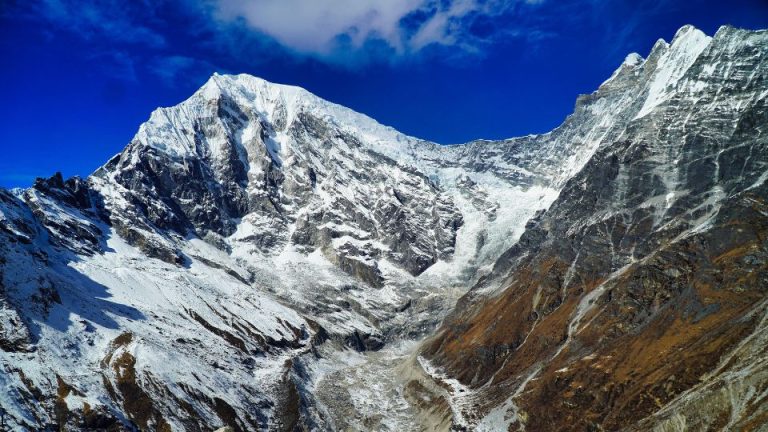
The final hikes to Kyanjin Ri or Tserko Ri from Kyanjin Gompa present the most demanding physical challenges of the entire trek. Trekkers typically choose between ascending Kyanjin Ri or Tserko Ri to view the Langtang Lirung mountain range. Both peaks require intense, sustained physical exertion, but they differ greatly in technical difficulty and duration.
| Peak Name | Peak Elevation | Average Completion Time (Round Trip) | Difficulty Level | Trail Characteristics |
| Kyanjin Ri | 4,770 meters | 3 to 4 hours | Challenging | Steep, continuous switchbacks on loose dirt |
| Tserko Ri | 4,985 meters | 7 to 8 hours | Strenuous | Boulder scrambling, prolonged exposure to wind, steep ascents |
Distance vs. Vertical Gain: Breaking Down the Daily Numbers
Our 8-day Langtang Valley itinerary balances steady altitude acclimatization with measurable physical milestones. Trekkers cover over 70 kilometers on foot between Syabrubesi and Kyanjin Gompa, navigating daily elevation gains that frequently exceed 800 meters. Analyzing these exact trail distances, vertical shifts, and difficulty ratings helps you build a targeted training plan and accurately calculate daily energy expenditure before arriving in the Himalayas.
| Itinerary | Average Daily Distance | Daily Elevation Gain / Loss | Difficulty Rating |
| Day 1: Kathmandu to Syabrubesi (Drive) | 122 km (Vehicle) | +150 meters (1,400m to 1,550m) | Easy (No Exertion) |
| Day 2: Syabrubesi to Lama Hotel | 11.3 km | +1010 meters (1,550m to 2,560m) | Moderate (Sustained Incline) |
| Day 3: Lama Hotel to Langtang Village | 14.8 km | +870 meters (2,560 to 3,430m) | Moderate |
| Day 4: Langtang Village to Kyanjin Gompa | 6.8 km | +440 meters (3,430m to 3,870m) | Easy (Acclimatization) |
| Day 5: Optional Tserko Ri or Kyanjin Ri Hike | 8.0 km (Round Trip) | +900m to +1,114 meters | Challenging to Strenuous |
| Day 6: Kyanjin Gompa to Lama Hotel | 21.0 km | -1,400 meters (Continuous Descent) | Moderate (High Knee Stress) |
| Day 7: Lama Hotel to Syabrubesi | 11.3 km | -920 meters (Continuous Descent) | Easy-Moderate |
| Day 8: Syabrubesi to Kathmandu (Drive) | 122 km (Vehicle) | -50 meters (1,450m to 1,400m) | Easy (No Exertion) |
The itinerary data highlights a critical, often-overlooked physical challenge: the rapid descent. Trekkers lose 2,320 meters of elevation over just 48 hours when returning from Kyanjin Gompa to Syabrubesi. This continuous downward trajectory places immense mechanical stress on knee and ankle joints. Consequently, an effective trekking preparation strategy must prioritize eccentric leg strength and weight-bearing exercises to protect your lower body during these demanding return days.
The 3 Pillars of Training
Preparing for the Langtang Valley route requires a structured, three-pillar fitness approach. We have structured effective training plans around cardiovascular endurance, leg power, and joint protection. This targeted physical preparation optimizes oxygen use at 3,800+ meters and prevents common trail injuries.
Cardiovascular Endurance: Building the “Lungs” for Thin Air
High-altitude environments drastically reduce atmospheric oxygen availability. Cardiovascular training increases your VO2 max, enabling your heart and lungs to deliver oxygen to your muscles more efficiently. Trekkers must focus on Zone 2 cardio: sustained, moderate-intensity aerobic exercises that elevate the heart rate to 60-70% of its maximum. Running, cycling, and swimming build this essential aerobic base. Completing 45 to 60 minutes of Zone 2 cardio three times a week trains the cardiovascular system to perform reliably under the hypoxic conditions found at Kyanjin Gompa.
Leg Strength & Power: Prepping Your Quads for the Syabrubesi Climb
The 1,010-meter ascent from Syabrubesi to Lama Hotel and Tserko Ri hike features steep, continuous ascent. Conquering this Day 2 and Day 5 incline requires explosive leg power and sustained muscular endurance. Targeted resistance training prepares your quadriceps, hamstrings, and glutes for these demanding upward pushes. Trekkers must integrate weighted squats, forward lunges, and weighted step-ups into their weekly routines. Executing three sets of 15 step-ups on a 12-inch box directly mimics the repetitive biomechanical stress of the Langtang Khola valley trail, ensuring your legs maintain power throughout the 11.3-kilometer hike.
Weight Bearing: Why You Should Train with Your Trekking Pack
Walking on flat ground differs entirely from climbing hills with added resistance. Even when trekkers hire a local porter to carry heavy duffel bags, every hiker carries a personal daypack containing water, rain gear, and daily essentials. Trekkers must condition their core and shoulders by training with a loaded pack. Begin training with a 5-kilogram daypack during local hikes or gym stairmaster sessions. Over four weeks, incrementally increase the load to a target weight of 8 to 10 kilograms. This progressive weight-bearing strategy strengthens back stabilizers and prevents shoulder fatigue during 7-hour trail days.
The “Descent” Muscles: Protecting Your Knees on the Way Down
Many trekking plans completely overlook the physical toll of rapid altitude loss. The 1,400-meter continuous descent from Kyanjin Gompa to Lama Hotel places massive braking forces on the lower body, frequently causing severe knee pain after trekking. Protecting your joints requires targeted eccentric muscle training: exercises that lengthen the muscle under tension, such as slow, controlled downward step-offs. Trekkers also need proper gear to distribute this mechanical impact. Utilizing adjustable trekking poles absorbs up to 20% of the compressive stress on the knee joints per step, preventing patellar tendon inflammation during the steep return journey.
The 8-Week Training Schedule: A Beginner’s Timeline
Structuring a precise training timeline ensures physical readiness and prevents pre-trek injuries. A defined schedule transforms average baseline fitness into sustained mountain endurance. Travel To Nepal recommends initiating this focused physical preparation exactly 8 weeks before your Kathmandu arrival.

This progressive 8-week timeline builds the exact cardiovascular base and muscular endurance needed for the 3,800-meter ascent to Kyanjin Gompa. Splitting the preparation into three distinct phases allows your body to safely adapt to increasing physical demands.
Weeks 1-2: Getting Your Body Used to Moving (Base Building)
- The Goal: Wake up your heart and leg muscles.
- Cardio (3 times a week): Do 45 minutes of easy cardio, like brisk walking, light jogging, cycling, or swimming. Layman tip for “Zone 2”: You should be moving fast enough to sweat, but still able to hold a full conversation without gasping for air.
- Leg Strength (2 times a week): Do exercises using just your body weight—no gym equipment needed. Focus on squats (like sitting in an invisible chair) and forward lunges. Do 15 of them, take a short rest, and repeat that process three times (this is what “3 sets of 15” means). This specifically strengthens your front thigh muscles for the uphill climbs.
Weeks 3-5: Adding Weight and Hills (Load Introduction)
- The Goal: Start mimicking the actual feeling of the trek.
- Cardio: Bump up your weekday cardio sessions from 45 minutes to a full hour.
- The Weekend Hike: Go outside for a 2-hour walk on uneven dirt trails. Wear your trekking backpack with about 5 kilograms (11 pounds) of stuff inside. (Tip: Use large water bottles or heavy books to create this weight).
- Step-Ups: Start stepping up and down on a 12-inch box, a sturdy bench, or the bottom stairs of your house while holding some small weights. This movement directly trains your legs for the endless stone staircases you will face right at the start of the Langtang trail in Syabrubesi.
Weeks 6-8: Matching the Mountain and Resting (Peak Conditioning)
- The Goal: Push your endurance to the maximum, then let your body heal before the trip.
- The Long Hike: Make your weekend practice hike much longer—aim for 4 hours. Fill your backpack so it weighs 8 to 10 kilograms (17 to 22 pounds). This matches the exact weight you will carry on the mountain.
- Weekday Cardio: Keep up with two intense, sweaty cardio sessions during the week to keep your lungs strong.
- The “Taper” (Resting): Exactly one week before your departure, stop lifting heavy weights and stop doing long hikes. Switch to light stretching or short, easy walks instead. Your muscles need this full week to repair themselves so you arrive in Kathmandu feeling completely fresh and energized, not exhausted.
Stair Climbing vs. Hiking: Which is Better for Langtang?
Trekkers frequently debate the physiological effectiveness of gym stairmasters versus outdoor trails. Both training methods offer distinct cardiovascular benefits, but outdoor trail hiking ultimately provides superior biomechanical preparation for the Langtang Valley.
- Stairmaster Benefits: The stairmaster delivers highly efficient, uninterrupted cardiovascular conditioning. Users can precisely control their heart rate and track exact vertical elevation gains per minute without leaving the city.
- Outdoor Trail Hiking Benefits: Hitting local dirt trails builds essential ankle stability. Uneven terrain forces the foot and lower leg micro-muscles to constantly adjust, perfectly mimicking the rocky, unpredictable paths found between Lama Hotel and Langtang Village.
Travel To Nepal advises combining both methods: utilize the stairmaster for controlled weekday cardio and prioritize rough, uneven outdoor trails for your weighted weekend endurance walks.
Active Recovery: Why Rest is Part of Your Training Plan
Continuous daily exertion without scheduled rest causes severe muscle fatigue. Strategic active recovery accelerates muscle repair and prevents debilitating overtraining injuries before your flight to Nepal. Trekkers must integrate two dedicated recovery days per week into their 8-week schedule. Active recovery involves low-impact movement, such as 20 minutes of gentle yoga or swimming, which increases blood flow without mechanically stressing the joints. Implementing daily stretching routines that specifically target the hip flexors, hamstrings, and calves maintains the dynamic flexibility required for steep Himalayan ascents.
Testing Your Gear: Breaking in Your Boots Before the Trail
Physical conditioning holds no value if severe foot pain halts your forward progress. Trekkers must use their 8-week training window to systematically break in their primary trail footwear. Wear your chosen hiking boots during every weekend endurance hike to soften the material and identify friction points. Pairing these boots with high-quality merino wool socks creates a moisture-wicking barrier essential for proactive blister prevention. This real-world gear testing ensures your footwear perfectly molds to your foot shape long before you face the grueling 1,010-meter climb out of Syabrubesi.
Health & Safety Preparation for Langtang Trek
Comprehensive health preparation ensures a safe and successful journey through Langtang National Park. We prioritized a holistic approach to mountain safety, bridging the gap between physical conditioning, physiological acclimatization, and mental readiness.
The Mental Game: Staying Motivated When the Trail Gets Steep
Building physical strength solves only half the trekking equation. Cultivating mental stamina empowers you to conquer the relentless, multi-hour inclines in the Langtang Valley Trek. Trekkers must practice deliberate pacing to conserve energy during these steep ascents, adopting a steady, rhythmic step rather than rushing and exhausting themselves. Developing psychological resilience helps you push through temporary muscle fatigue and cold mornings. When the physical exertion peaks, you must focus your mindset on the ultimate reward: emerging from the dense, enclosed forests into the expansive, glacier-ringed beauty of the Langtang Valley.
Altitude Awareness: Can You “Train” to Prevent Altitude Sickness?
Many beginners hold a dangerous misconception about mountain elevations: excellent physical fitness does not prevent Acute Mountain Sickness (AMS). Trekkers must clearly separate cardiovascular conditioning from physiological acclimatization. A marathon runner faces the exact same AMS risk at 3,800 meters as a novice hiker.
Preventing altitude sickness requires strict adherence to slow ascent profiles, allowing your red blood cells time to multiply and carry oxygen more efficiently. Medical professionals frequently recommend carrying Diamox (Acetazolamide) as a prophylactic medication to accelerate this acclimatization process. Pairing a slow walking pace with aggressive hydration remains your primary defense against altitude-related illnesses.
Stretching & Flexibility: Yoga Poses for Trekkers
Continuous daily walking over rocky, uneven terrain drastically tightens the lower body musculature. Integrating specific yoga poses into your daily post-trek routine prevents debilitating muscle cramps and maintains joint mobility for the next day’s hike. Trekkers should execute these targeted stretches to relieve the exact muscles heavily recruited on the Langtang trail:
- Downward-Facing Dog (Adho Mukha Svanasana): Elongates the hamstrings and deeply stretches the calf muscles, which contract intensely during the initial steep climbs.
- Low Lunge (Anjaneyasana): Opens the hip flexors and releases deep muscular tension built up from lifting heavy trekking boots over hundreds of stone steps.
- Pigeon Pose (Eka Pada Rajakapotasana): Stretches the glutes and piriformis, effectively preventing the lower back pain frequently caused by carrying a weighted daypack for 7 hours.
Nutrition & Hydration: Fueling Your Body for Peak Performance
High-altitude exertion depletes bodily resources rapidly. Trekkers must consume adequate calories and fluids to sustain the required daily energy outputs. Hydration dictates high-altitude success; trekkers must consume 3 to 4 liters of purified water daily to flush toxins, facilitate acclimatization, and lubricate stressed knee joints.
For caloric intake, embrace the ultimate traditional Nepali trekking fuel: Dal Bhat. Teahouses along the Langtang route serve this nutrient-dense staple, providing unlimited refills of steamed white rice, rich lentil soup, and seasonal vegetable curries. Dal Bhat delivers the perfect, highly digestible ratio of complex carbohydrates and plant-based proteins required to power your body through daily 10 to 15-kilometer distances.
Conclusion
Conquering the Langtang Valley Trek demands strategic physical preparation, not just blind enthusiasm. Executing this 8-week training schedule equips your body to handle 800-meter daily elevation gains and the massive 1,400-meter rapid descent from Kyanjin Gompa safely. Integrating Zone 2 cardiovascular workouts, progressive weight-bearing hikes, and active recovery routines transforms your baseline fitness into reliable high-altitude endurance. Pairing this targeted physical conditioning with strict acclimatization protocols, deliberate pacing, and aggressive daily hydration ensures you avoid altitude sickness and debilitating joint injuries. Travel To Nepal encourages you to start loading your daypack and hitting the local trails today, guaranteeing you arrive in Syabrubesi fully prepared to enjoy every breathtaking view of the Himalayan landscape.