
Updated Langtang Valley Trek – 8 Days Itinerary & Cost
Find the Latest Langtang Trek itinerary after the Bhotekoshi flood, including per-person costs for 2026 and 2027, route maps, details on who the trek is right for, and essential pre-trek information.

Latest Update: The Langtang Valley Trek has reopened using Thulosyabru instead of Syabrubesi as the starting and ending point. Road conditions remain uncertain as some sections were recently rebuilt and could be affected by heavy rainfall. Send us your preferred trekking dates, and we’ll check the latest road and trail conditions and confirm whether the trek is possible.
The Langtang Valley Trek takes trekkers through Langtang Valley, one of the most beautiful and popular valleys within Langtang National Park. The valley is home to mountain settlements such as Kyanjin Gompa, Langtang Village, Thulosyabru, and Sherpagaon. It also features wide green meadows, the clear and fast-flowing Langtang River, glaciers, and towering Himalayan mountains, including Langtang Lirung, Naya Kanga, and Ganchenpo.
We have newly updated the Langtang Valley Trek starting point from Syabrubesi to Thulosyabru. After the recent catastrophic flood, Syabrubesi has been severely affected, so right now, we cannot use Syabrubesi for our trek. The Langtang trail from Thulosyabru has been largely unaffected. The driving road from Kathmandu to Thulosyabru has now been opened, making the trek possible.
This new 8-day Langtang Valley Trek itinerary is of moderate difficulty because it does not have challenging ascents or overly long walking distances, and there are many villages along the way for resting or staying overnight. Therefore, this trail is suitable for all groups of people, including beginners, children, and seniors.
The best trekking seasons for the trek are Autumn (October to December) and Spring (March to May), and all trekkers need to obtain a Langtang National Park Permit before starting the Langtang Trek.
The trek covers a total round-trip distance of approximately 75 kilometers (46.6 miles). The actual trek (walking) begins in Thulosyabru, located at an elevation of 2,210 meters (7,250 feet). The highest elevation of the trip is reached during optional hikes from Kyanjin Gompa to either Tserko Ri (4,984 meters / 16,351 feet) or Kyanjin Ri (4,773 meters / 15,659 feet).
Langtang National Park provides two other trekking options also: Gosaikunda trail and Tamang Heritage trail. You can complete these treks independently o
Trek Langtang is a local, responsible trekking company in Nepal. We specialize in trekking within the Langtang region, including the Langtang Valley, Gosaikunda, Helambu, and the Tamang Heritage Trail, and are confident in providing our trekkers with the best possible service in Langtang.
Table of Contents
Langtang Valley Trek Cost (8 day)
The table below breaks down the per-person cost for the Langtang Trek based on group size.
USD 340 / person
| No. of people | Price per person |
|---|---|
| 1 Pax | USD 570 |
| 2 Pax | USD 375 |
| 3 to 5 Pax | USD 340 |
| 6 to 9 Pax | USD 290 |
| 9 to 12 Pax | USD 270 |
Speak to An Expert

Cost Includes and Excludes
Cost Includes
- Local jeep transfer Kathmandu to Thulosyabru
- Local jeep transfer Syabrubesi to Kathmandu
- Accommodation in Twin-sharing Basis in Mountain Lodges
- Local English-Speaking Guide for 8 days
- Langtang National Park Permit
- Trekking Map, Sun Hat, Duffel Bag
- Trip completion certificate
- Medical supplies (first aid kit will be available)
- Special Surprise Moments (disclosed only during the trek)
- Government Taxes
Cost Excludes
- Porter service for 8 days (optional – extra USD 170 per porter). One Porter can carry 2 trekkers load (24 kg)
- Meals (breakfast, lunch, and dinner) during the trek – around USD 15 Per Day Per Person
- Personal Expenses and Travel insurance, including high-altitude emergency evacuation coverage
- Tips for trekking staff and driver
- Hot showers, Wi-Fi usage, and battery charging
- International Payment Bank Charges
- Any expenses not mentioned in the Includes section
Why Our Trekking Packages Exclude Meals?
We (Trek Langtang) do not include meals in our standard trekking packages. This approach gives our trekkers full control over their daily food choices during the Langtang Valley Trek. Fixed meal plans restrict trekkers to preset menus, while a meals‑not‑included system allows them to order based on appetite and pay teahouse owners directly. This method supports local lodge operators and reduces food waste.
Policy Benefits and Logistics
- Dietary Flexibility: Trekkers choose meals according to daily appetite and how their digestion responds to altitude changes.
- Direct Local Support: Payments go straight to families operating teahouses, supporting the transport of food supplies by porters and mules.
- Cost Transparency: Payments go straight to families operating teahouses, supporting the transport of food supplies by porters and mules.
- Elevation‑based pricing: Food costs increase at higher locations because transporting ingredients to elevated stops requires more resources.
Reserve Your Langtang Trek
Latest Langtang Valley Trek Itinerary Overview
This updated 8-day Langtang Valley Trek itinerary was prepared after the Bhotekoshi flood. We have changed the trek’s starting and ending point from Syabrubesi to Thulosyabru. Located at a higher elevation, Thulosyabru was unaffected by the flood. The trekking trail is also unaffected because it does not cross or follow the Bhotekoshi River. Only the jeep road was affected, and it has now been reopened.
This 8-day itinerary is ideal for trekkers with a good level of fitness. It allows you to experience the pristine beauty of the Langtang Valley at a steady pace, providing a solid workout (averaging 7 hours of walking per day) without over-exhausting the body or rushing the essential acclimatization process.
The table below summarizes the complete 8-day Langtang Valley trek itinerary; the detailed descriptive itinerary appears below. The journey begins with an overland drive from Kathmandu to Thulosyabru. Then, trekkers walk through Bamboo, Lama Hotel, and Langtang Village to reach the final settlement of Kyanjin Gompa. The schedule includes a high-altitude acclimatization hike to either Tserko Ri or Kyanjin Ri before the return trip to Kathmandu.
| Day | Route (Start → Destination) | Activity | Elevation (Altitude) |
|---|---|---|---|
| 1 | Kathmandu → Thulosyabru | Drive | Thulosyabru – approx. 2,210 m / 7,250 ft |
| 2 | Thulosyabru → Lama Hotel | Trek | Lama Hotel – approx. 2,470 m / 8,103 ft |
| 3 | Lama Hotel → Langtang Village | Trek | Langtang Village – approx. 3,430 m / 11,253 ft |
| 4 | Langtang Village → Kyanjin Gompa | Trek | Kyanjin Gompa – approx. 3,830 m / 12,565 ft |
| 5 | Kyanjin Gompa ↔ Kyanjin Ri / Tserko Ri | Hike and Return | Kyanjin Ri 4,773 m (15,659 ft) / Tserko Ri 4,984 m (16,351 ft) (max point) |
| 6 | Kyanjin Gompa → Lama Hotel | Trek (descent) | Lama Hotel – approx. 2,470 m / 8,103 ft |
| 7 | Lama Hotel → Thulosyabru | Trek | Thulosyabru – approx. 2,210 m / 7,250 ft |
| 8 | Thulosyabru → Kathmandu | Drive | Kathmandu – approx. 1,400 m / 4,600 ft |
What Makes Our (Trek Langtang) Itinerary Better?
As our name suggests, Trek Langtang is a Langtang-first company. This means we possess deep, local knowledge of every trail, ridge, and hidden corner of the Langtang Valley. We maintain close, personal relationships with the teahouse owners in every village, ensuring our guests receive the warmest hospitality and the best available service.
While many generic trek agencies also offer a standard 8-day itinerary, we have improved our route. We have chosen different trails and villages that offer open, better views and higher-quality accommodations, ensuring your experience is both scenic and comfortable rather than just a “standard” trek.
If you feel 8-day itinerary pace might be too demanding, or if you simply wish for more time to soak in the scenery, we can extend this itinerary to 9 or 10 days. This relaxed pace is particularly recommended if you are traveling with children, trekking for the first time, not used to walking long distances, or are a senior trekker, ensuring a comfortable and enjoyable experience for everyone. Conversely, if you are an experienced high-altitude trekker comfortable above 5,000 meters and feel confident in your ability to move faster, please visit our “Langtang Itineraries” page. There, you will find a full range of routes within Langtang National Park, ranging from 4 to 14 days.
Grab the Quick-Ref Guide: We’ve prepared an 8-Day Langtang Valley Trek Cost and Itinerary Summary in a handy Google Doc. Feel free to download, save a copy, and share it with your friends. You can access the itinerary and cost breakdown instantly without having to scroll through this entire trek guide again.
Langtang Trek Gallery
We’ve compiled six stunning photos to give you a glimpse into the world of Langtang. Imagine trekking through verdant hills as the turquoise Langtang River rushes beside you, eventually reaching the high-altitude sub-alpine meadows of Kyanjin Gompa. Along the way, keep an eye out for diverse wildlife from playful monkeys and vibrant Himalayan birds to the elusive Red Panda (need to be lucky to spot Red Panda). You’ll be surrounded by the rich traditions of Buddhist villages, all under the watchful gaze of the region’s crown jewel: Langtang Lirung (7,227m).
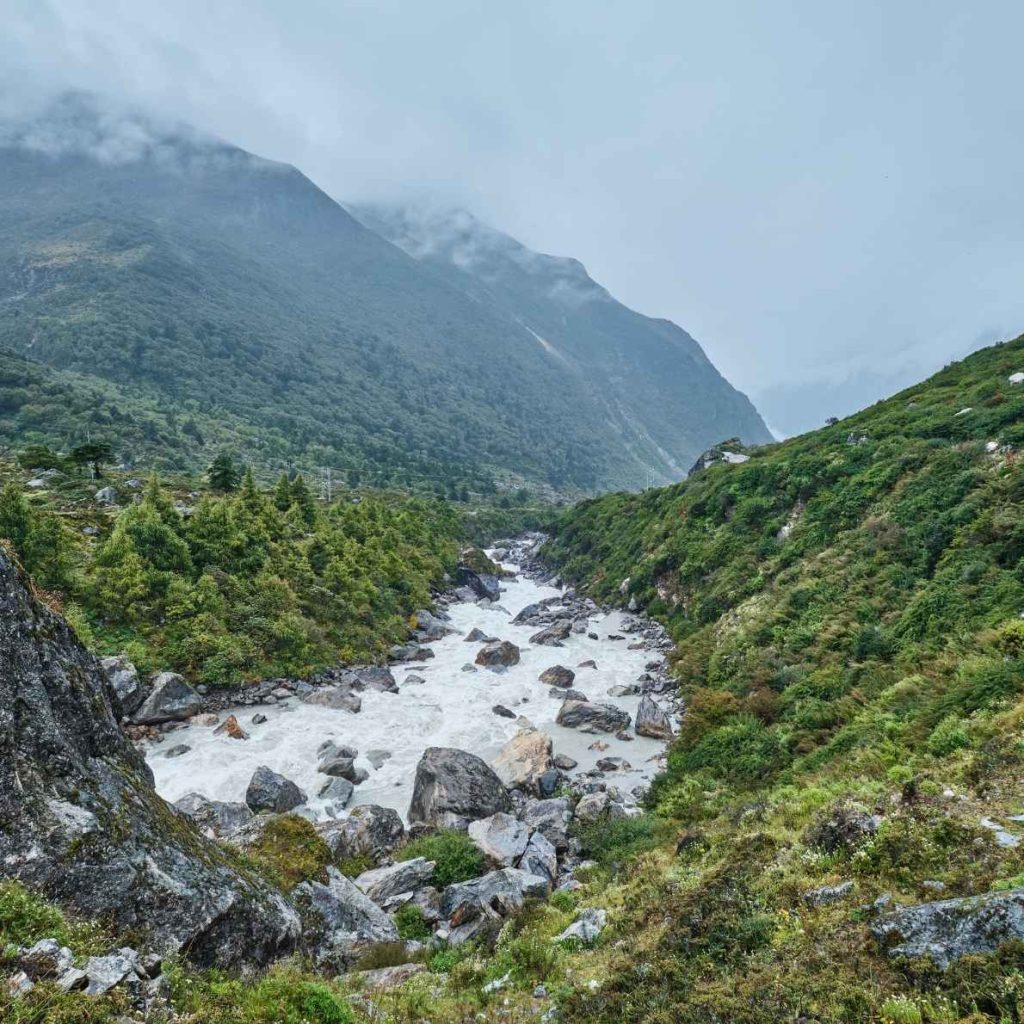
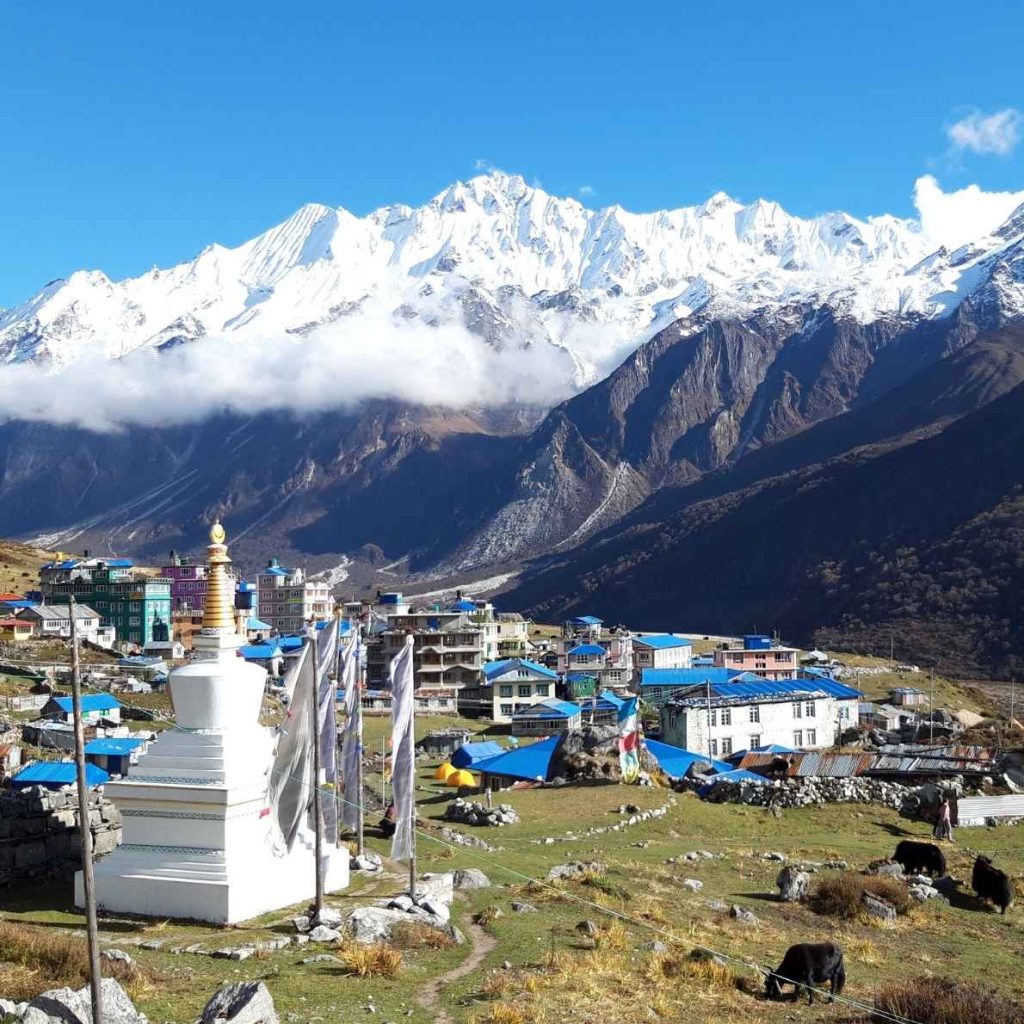

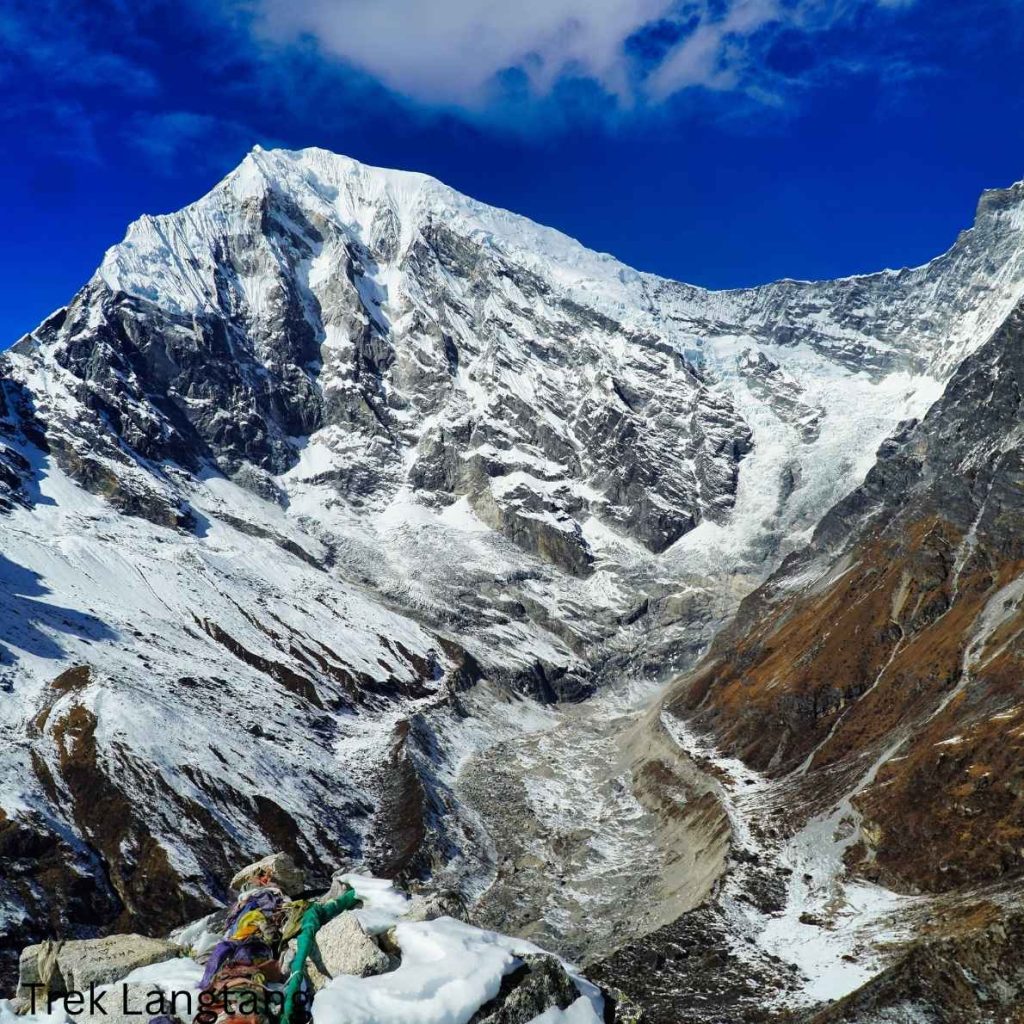
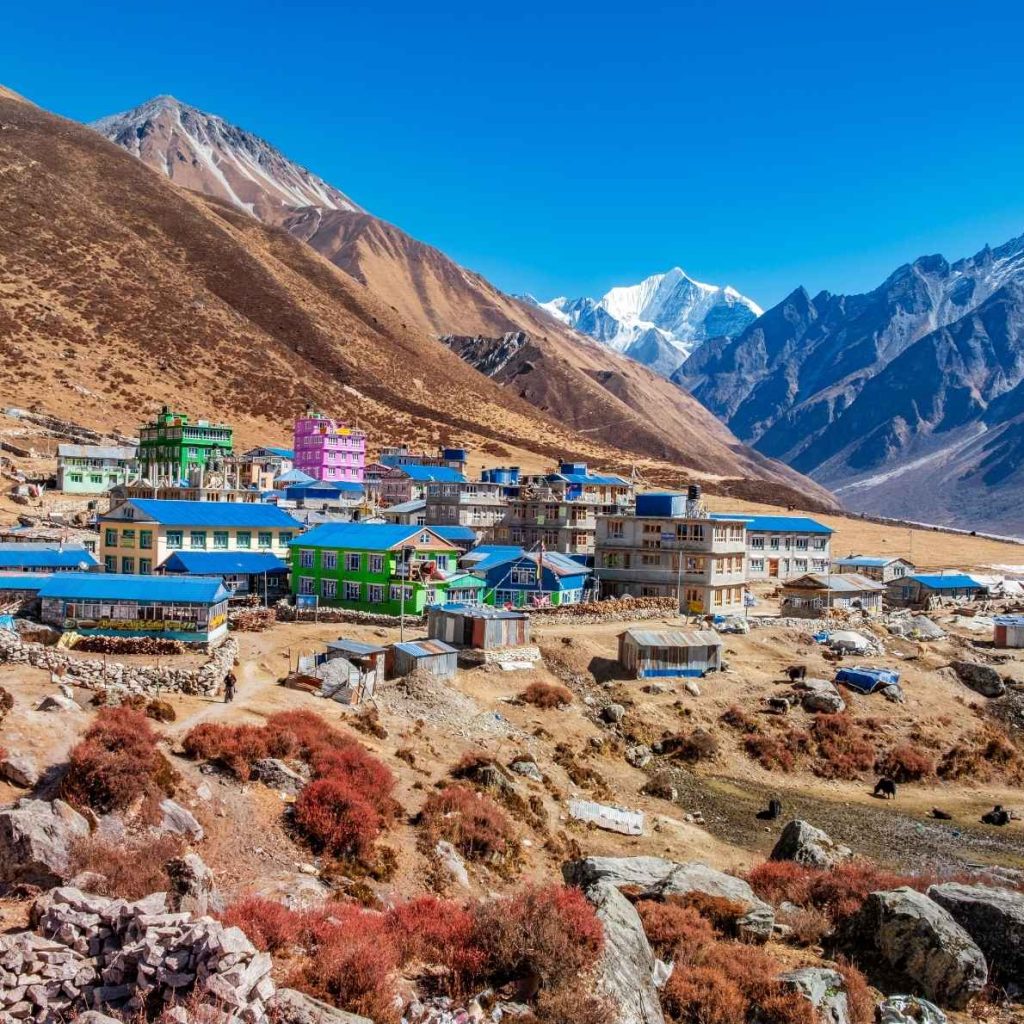
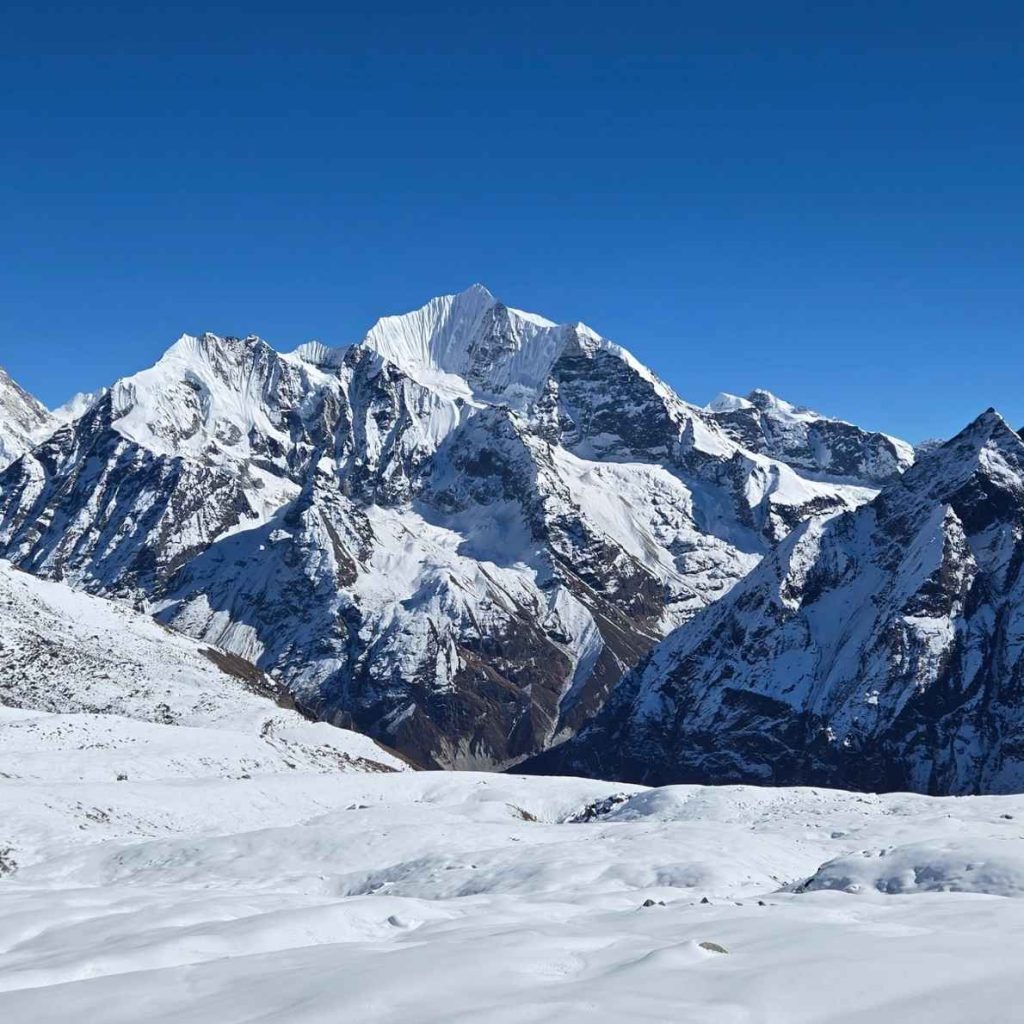
Want to see more photos of Langtang Valley? We’ve curated a gallery of 41 stunning photos that capture the true soul of the Langtang Valley Trek. It’s the perfect way to visualize your upcoming adventure. To see them, simply search “41 Best Photos of Langtang Valley Trek” and click the result from Trek Langtang.
Langtang Valley Trek Guide
The sections above cover the standard itinerary, cost details, and how to choose the right trek duration based on your fitness level. What follows is our Essential Guide to Langtang. This is a collection of “insider knowledge” we’ve gathered after guiding thousands of trekkers through these trails. While this section is comprehensive, feel free to skim for the topics most relevant to you. Rest assured, once you arrive in Nepal, we will provide a full briefing to ensure you’re prepared for every aspect of your journey. Our goal is simple: to make sure you have the best possible experience in Langtang!
Is Langtang Trek For You?
The Langtang Valley Trek provides a short, affordable, and high-altitude alternative to other longer Himalayan routes. You can reach the starting point via a 7-hour drive from Kathmandu, entirely bypassing domestic flights cost. This 8-day journey crosses Langtang National Park, offering broad mountain viewpoints and opportunities to spot rare wildlife. Based on its trail conditions and logistics, the Langtang Trek directly suits these five types of travelers:
- Time-Conscious Adventurers
- Travelers with limited holiday time can complete the Langtang Valley Trek in about 8 days.
- This 8-day duration requires significantly less time than the 14-day Everest Base Camp Trek or the 13-day Annapurna Circuit Trek.
- The trek begins after just a 7-hour drive from Kathmandu, which simplifies logistics and allows for a faster return to the capital.
- Budget-Conscious Trekkers
- Trekkers lower their total trip cost by using ground transportation (drive to Thulosyabru from Kathmandu) instead of booking domestic flights to mountain airports like Lukla.
- The condensed 8-day itinerary naturally reduces overall daily expenses on the trail.
- First-Time High-Altitude Trekkers (including Families and Senior Hikers)
- As the Langtang trail is moderately difficulty, it is doable for beginners also.
- Hikers face a lower maximum altitude compared to treks that cross 5,000-meter-plus passes in the Everest or Annapurna regions and the ascent is also relatively easier in Langtang.
- Comfort-Seekers and Social Trekkers
- Visitors secure reliable lodging and meals in well-established teahouses throughout the 8-day circuit.
- The Langtang route features teahouse infrastructure that parallels the Everest region and surpasses the Annapurna Circuit.
- The trail’s popularity guarantees that trekkers will meet like-minded travelers in teahouses, creating daily opportunities for conversation and cultural exchange.
- Wildlife Enthusiasts and Nature Lovers
- Hikers cross multiple vegetation zones inside Langtang National Park, transitioning from lower-elevation temperate green forests to high alpine shrubs.
- The park protects endangered wildlife habitats, providing trekkers the chance to spot rare species like the Red Panda and the Snow Leopard.
- The trail consistently delivers wide-angle ridge and valley views alongside these biodiverse environments.
Langtang Valley Trek Map
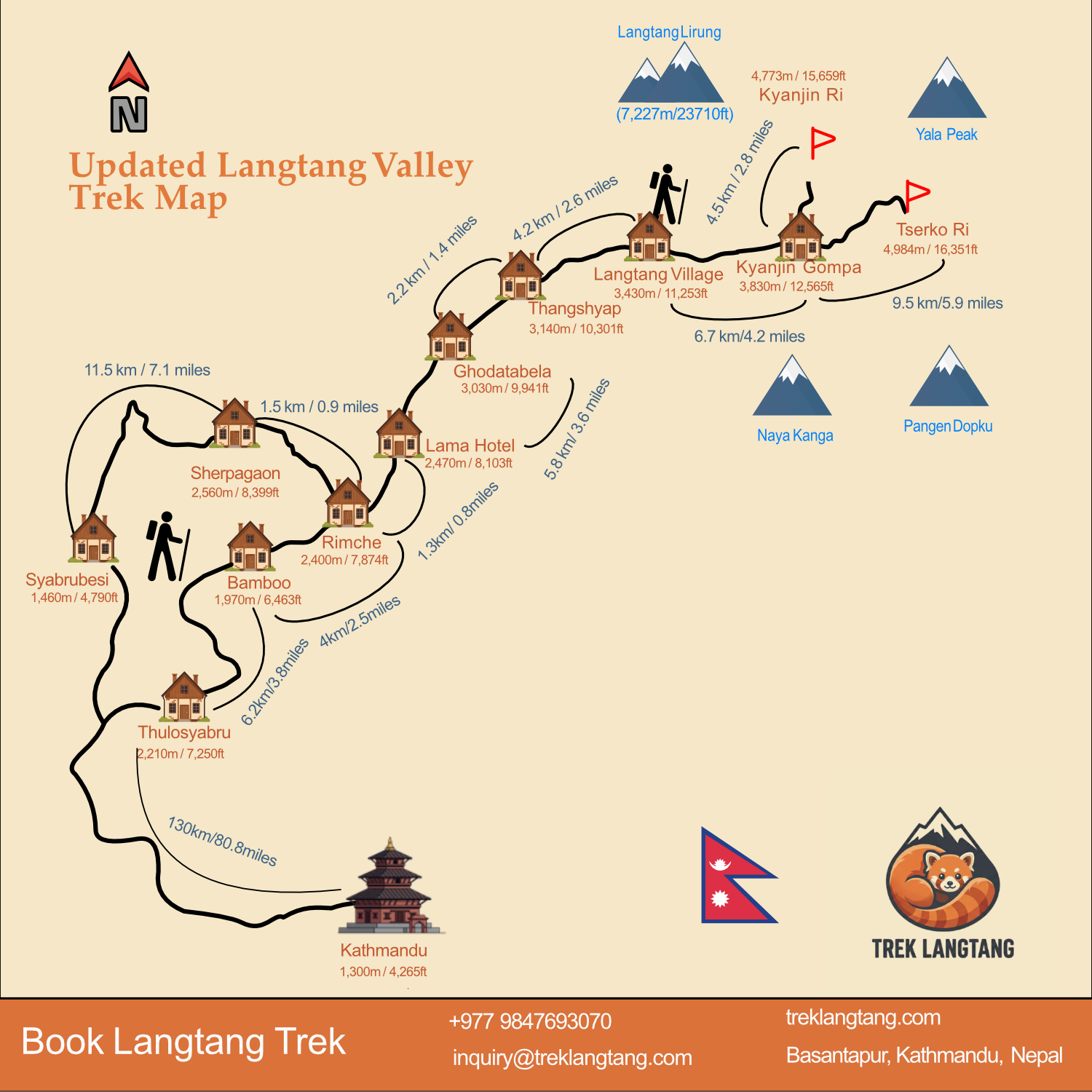
Our Langtang Valley Trek Map provides a comprehensive look at the route from Kathmandu and Thulosyabru through Lama Hotel and Langtang Village, all the way to Kyanjin Gompa. For your safety and planning, the map includes precise altitudes (in both meters and feet) for all major villages and surrounding peaks, including Langtang Lirung, Yala Peak, Pangen Dopku, and Naya Kanga. You will also find exact distances between each landmark, including the popular viewpoints of Tserko Ri and Kyanjin Ri.
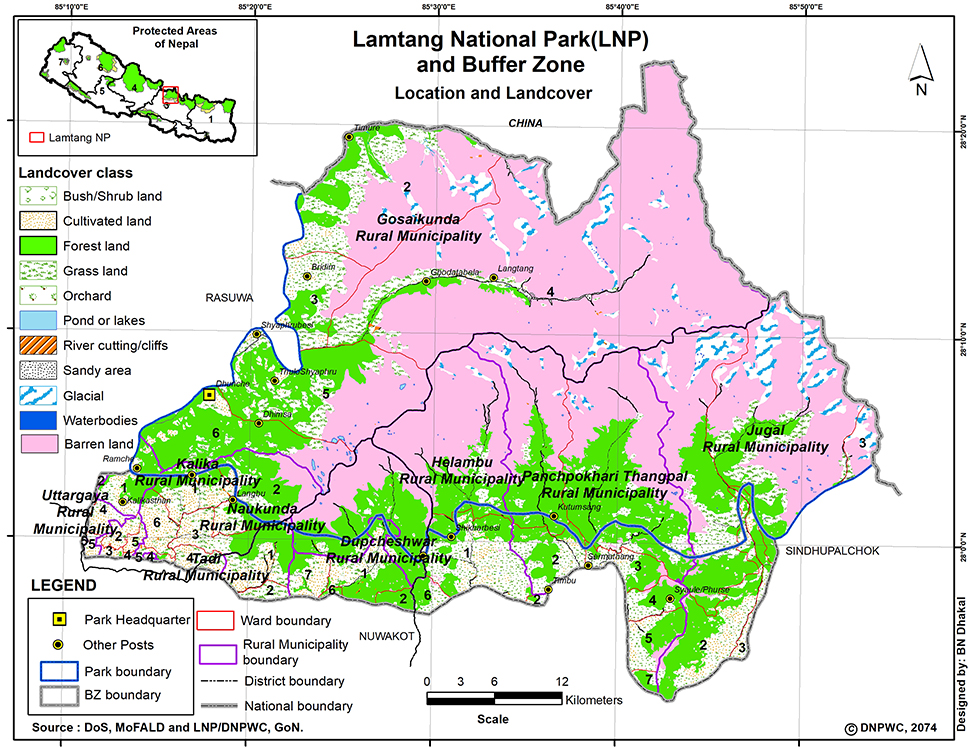
Langtang National Park Geographic Map
The map below illustrates the diverse landscape of the Langtang National Park, showing features such as forests, lakes, waterbodies, glaciers, and barren land.
Why “Trek Langtang”?
Local Experts
Our local guides from Sherpa, Limbu, Rai, Chhetri community safely navigate the mountain trails and share authentic cultural insights.
24/7 Support
Our team provides round-the-clock assistance throughout your entire journey.
Transparent Policy
You pay exactly what we quote. Our transparent policies clearly define every inclusion and exclusion, ensuring no hidden fees or clauses.
Active Guardianship
As a sister company of “Travel to Nepal”, we strictly enforce the “Guarding the First Living Shangri-La” policy. We pack out all waste, protect regional wildlife, and guarantee fair wages for our local staff.
Personalized Itineraries
We customize your daily trekking schedule to match your exact pace and interests.
Our Reviews
What are the Langtang Valley Trek Highlights in 2026/2027?
The main highlights of Langtang Valley trek is its pristine meadows and Himalaya, Buddhist cultural vibrancy, 360 degree breathtaking mountain views, and massive glaciers all around. These highlights have been listed with more description in the below points:
- Langtang National Park Landscape: The trek passes through Langtang National Park, a Himalayan conservation area containing rhododendron forests, bamboo zones, alpine meadows, and wildlife such as red pandas, Himalayan tahr, and musk deer.
- Prominent Himalayan Peaks: Trekkers see 360-degree mountain views including major peaks such as Langtang Lirung (7,227 m), Gangchhenpo, Naya Kanga, Langshisha Ri, and Dorje Lakpa, which form the dominant mountain structures of the valley.
- Kyanjin Gompa Buddhist Cultural: Kyanjin Gompa functions as the cultural and geographic center of the upper Langtang Valley. The settlement includes a Buddhist monastery and a long‑established yak‑cheese facility representing high‑altitude livelihoods.
- High‑Altitude Peaks Ascend: Trekkers can ascend Kyanjin Ri (4,773m) or Tsergo Ri (4,984 m) for high‑altitude panoromic views of Langtang Valley, Langtang Lirung and surrounding peaks, as mentioned above.
- Tamang and Tibetan‑Influenced Villages: The route passes through Tamang, Sherpa, and Lama villages where communities maintain Tibetan‑influenced traditions.
- Valley of Glaciers: The Langtang Valley is known as “Valley of Glaciers,”. You can see staggering 360-degree panorama of massive hanging glaciers and the Great Langtang Glacier itself.
- Never Ending Streams: As you ascend from Ghodatabela, the terrain comes alive with crystalline water streams and cascading waterfalls at every turn. The constant, rhythmic hum of these glacial streams provides a naturally relaxing soundtrack to your trek, offering a sense of deep Himalayan serenity as you approach the heart of the valley.
The Best Highlight: The Calling of the Mountains
Many trekkers speak of the “calling of the mountains,” but it is a feeling best understood through experience rather than words. Standing at the summits of Kyanjin Ri or Tserko Ri, the sheer massiveness of Langtang Lirung often triggers a profound sense of awe. It is a humbling realization of how tiny our existence is compared to these ancient giants yet, in that same moment, you feel an inexplicable, deep connection to them. This is the “life-changing perspective” so many travelers describe; it is the soul-stirring realization of being part of something much greater than oneself.
How do you experience the “Calling of the Mountains” in Langtang Valley?
To truly hear this call, one must be an observant listener. When you reach the viewpoint, I recommend you step away from the crowd and find a serene, solitary spot. Spend at least five minutes in mindful silence, gazing at the vertical cliffs and the massive, hanging glaciers of Langtang Lirung. By simply being present and observing the mountain’s stillness, you may find that the mountain begins to “speak” to you. If you allow yourself this quiet immersion, it can become a transformative moment, a quiet epiphany that stays with you long after you’ve left Nepal.
Latest Langtang Valley Trek News (September 26, 2026)
The Langtang Valley Trek has now reopened following the continuous work of the Nepal government to restore access and infrastructure after the severe flash flood and landslide disaster of August 26, 2026.
The trekking route from Thulosyabru to Kyanjin Gompa is now open for trekkers. However, the traditional starting point at Syabrubesi has been affected by the disaster, so we have changed the trek’s starting point to Thulosyabru. This allows trekkers to access the Langtang Valley while avoiding the damaged Syabrubesi area.
However, please note that some sections of the road have been newly reconstructed, so rainfall could still block the roads at any moment. Please contact us or your local trek agent about the road conditions before deciding to start your trek.
For the latest information, please visit our Latest Langtang Valley News page.
Best Months to Trek Langtang Valley in 2026/2027
The best months to trek Langtang Valley are October, April, November, and December. These months fall within the peak Autumn (October to December) and Spring (March to April) seasons. During these times, temperatures are comfortable, skies are clear, and the trails are vibrant with greenery and wildflowers. Below, we have ranked the months based on trail conditions and weather to help you choose the best time for your adventure:
1. October (Starting Oct 5)
Starting from October 5, this is widely considered the best month for trekking in Langtang. The road has been rebuilt. However, we need to be cautious that rainfall might still damage the roads. While the first few days of the October may see lingering monsoon rain, it typically stops by the 5th. The clouds clear away, offering trekkers breathtaking, crystal-clear views of the Himalayas. Furthermore, the daytime temperature is perfect for hiking.
2. April (Full Month)
April is the second-best month to visit the Langtang region. During this time, the weather stabilizes and provides excellent good views. While the air may not be quite as crisp as in Autumn, April is the peak season for blooming Rhododendrons (red, pink, and white), which transform the scenery and the trail. The temperatures remain comfortable for trekking.
3. November (Full Month)
November is another fantastic choice to trek to Langtang valley. The views remain exceptionally clear, though temperatures begin to drop toward the end of the month. While it can get quite chilly at night, you will benefit from thinner crowds, offering a more peaceful experience on the trail.
4. December (Up to Dec 20)
Traditionally, December was avoided due to freezing temperatures. However, due to shifting climate patterns, the first half of December is now quite suitable for trekking. While nights are cold, daytime temperatures remain pleasant for walking. Be prepared for snow at higher elevations like Kyanjin Ri and Tserko Ri, where you may need to hike through fresh snow.
5. March (Starting Mar 15)
March marks the beginning of Spring. While you will see the first Rhododendrons blooming, visibility is often lower than in April due to occasional cloud cover. Recently, rainfall patterns have shifted, making the first half of March slightly more unpredictable.
6. May (Full Month)
May marks the end of the Spring season. Early May still offers clear weather and the last of the Rhododendron blooms. However, by late May, the air becomes hazier and clouds begin to build up as the monsoon approaches. On the plus side, the trails are much quieter during this month.
Unpredictable Weather
Weather in the Himalayas is inherently unpredictable, and climate change has made historical patterns less certain. While these recommendations are based on long-term data, unexpected heavy snowfall or rain can occur. We always recommend that trekkers come prepared for all conditions with essential gear, including high-quality rain ponchos and warm, layered clothing.
Understanding Autumn and Spring Season in Langtang Valley
Autumn Season (October 5 to December 20)
Autumn provides the clearest mountain visibility across the Langtang Himal. Peaks such as Langtang Lirung and Dorje Lakpa usually remain cloud‑free due to post‑monsoon atmospheric stability. Roads connecting Kathmandu to Syabrubesi experience fewer rainfall interruptions during this period compared with the Monsoon months. Daytime temperatures at elevations around 3,500 meters, including Kyanjin Gompa, generally stay between 10°C and 20°C. These temperatures support stable walking conditions with light layers. Trails remain dry, reducing slipping hazards on forested climbs and narrow ridge paths.
Snowfall in early Autumn is rare. By early December, snow accumulates mainly on higher ridgelines while settlements such as Kyanjin Gompa remain clear during the daytime. These conditions allow trekkers to complete standard itineraries even in late Autumn.
Spring Season (March to May)
Spring provides warmer temperatures, melting snow, and longer daylight hours within Langtang National Park. Forest zones between Lama Hotel and Ghoda Tabela contain dense rhododendron stands that bloom during Spring. This blooming period creates clear color contrast with the surrounding mountain ranges. Warmer temperatures reduce icy patches on upper sections of the trail, lowering slip risk near Kyanjin Ri viewpoints. Wildlife activity increases across the sub‑alpine zones. Species such as the Himalayan Monal and Musk Deer show higher movement during this period, creating more observation opportunities without leaving designated trails.
Daylight duration during Spring supports longer walking periods, allowing trekkers to use more rest stops and maintain steady pace control on ascent days.
Detailed Langtang Trek Itinerary
Day 1: Drive from Kathmandu to Thulosyabru
Day 1: Drive from Kathmandu to Thulosyabru
The journey begins in Kathmandu and continues by road toward Thulosyabru, the new starting point for the Langtang Valley Trek. The drive follows the route toward Rasuwa District, passing through the Trishuli River corridor and mountain settlements.
Thulosyabru sits at approximately 2,210 meters and provides access to the Langtang Valley trekking route. After arriving, trekkers can rest, check their equipment, and prepare for the trek ahead.
The overnight stay in Thulosyabru also helps trekkers begin adjusting to the increasing elevation before starting the walking section of the Langtang Valley Trek.
Day 2: Trek from Thulosyabru to Lama Hotel
Day 2: Trek from Thulosyabru to Lama Hotel
The trek begins at Thulosyabru and follows the trail toward Lama Hotel. The route gradually enters the forested landscape of the lower Langtang Valley, with sections of uphill and downhill walking.
The trail passes through dense forests containing oak, rhododendron, bamboo, and other Himalayan vegetation. Trekkers follow mountain paths alongside streams and through small settlements as they move deeper into Langtang National Park.
Lama Hotel is located at approximately 2,470 meters and is a common overnight stop on the Langtang Valley route. The surrounding forest provides a quiet setting for the first night of trekking.
Day 3: Trek from Lama Hotel to Langtang Village
Day 3: Trek from Lama Hotel to Langtang Village
The trail continues from Lama Hotel toward Langtang Village, following the Langtang Khola upstream. The route gradually gains elevation as the forest becomes thinner and the valley begins to open.
Trekkers pass through settlements and forest sections before reaching Ghoda Tabela. From here, the landscape changes into a wider Himalayan valley with mountain views becoming more prominent.
Langtang Village stands at approximately 3,430 meters. The settlement is surrounded by high Himalayan peaks and serves as an important overnight stop before the short trek to Kyanjin Gompa.
Day 4: Trek from Langtang Village to Kyanjin Gompa
Day 4: Trek from Langtang Village to Kyanjin Gompa
The trail from Langtang Village to Kyanjin Gompa is a shorter walking section through the upper Langtang Valley. The landscape becomes increasingly alpine as the trail gains elevation.
The route passes through small settlements such as Mundu and Sindum and continues past Buddhist mani walls, chortens, and prayer flags. The valley gradually widens as trekkers approach Kyanjin Gompa.
Kyanjin Gompa sits at approximately 3,830 meters and is surrounded by Himalayan peaks and glaciers. Trekkers spend the night here and prepare for the following day’s optional hike to Kyanjin Ri or Tserko Ri.
Day 5: Hike from Kyanjin Gompa to Kyanjin Ri or Tserko Ri and Return
Day 5: Hike from Kyanjin Gompa to Kyanjin Ri or Tserko Ri and Return
This day is dedicated to exploring the high-altitude area around Kyanjin Gompa. Trekkers can choose between Kyanjin Ri at approximately 4,773 meters and Tserko Ri at approximately 4,984 meters, depending on weather, fitness, and trail conditions.
Kyanjin Ri provides a shorter viewpoint hike, while Tserko Ri requires a longer and more demanding ascent. Both viewpoints provide wide views of the surrounding Langtang Himalaya, including Langtang Lirung and other high peaks.
After reaching the selected viewpoint, trekkers descend back to Kyanjin Gompa for the night. Returning to the same accommodation avoids the need to carry overnight equipment during the viewpoint hike.
Day 6: Trek from Kyanjin Gompa to Lama Hotel
Day 6: Trek from Kyanjin Gompa to Lama Hotel
The descent begins from Kyanjin Gompa and follows the Langtang Valley trail back toward Lama Hotel. Trekkers retrace the route through the upper valley, passing the settlements of Mundu, Sindum, and Langtang Village.
As the trail loses elevation, the landscape gradually changes from alpine terrain to denser vegetation. Trekkers continue along the Langtang Khola through the valley and pass familiar sections of the trail.
Lama Hotel, at approximately 2,470 meters, provides the overnight stop. The lower elevation offers a significant change from the high-altitude environment around Kyanjin Gompa.
Day 7: Trek from Lama Hotel to Thulosyabru
Day 7: Trek from Lama Hotel to Thulosyabru
The trail continues downhill from Lama Hotel toward Thulosyabru. Trekkers follow the lower Langtang Valley route through forests and along the river corridor.
The descent brings trekkers back into a warmer and greener environment. The forest becomes denser at lower elevations, with bamboo, rhododendron, and other vegetation along the trail.
Thulosyabru, located at approximately 2,210 meters, marks the end of the walking section of the Langtang Valley Trek. Trekkers stay overnight before the drive back to Kathmandu.
Day 8: Drive from Thulosyabru to Kathmandu. Trip Ends
Day 8: Drive from Thulosyabru to Kathmandu. Trip Ends
The final day begins with a drive from Thulosyabru back to Kathmandu. The vehicle follows the road through the Rasuwa and Nuwakot areas toward the Kathmandu Valley.
The journey provides a final view of the mountain and river landscapes encountered during the trek before returning to the urban environment of Kathmandu.
Upon arrival in Kathmandu, the Langtang Valley Trek officially ends. Trekkers can continue with onward travel or enjoy a rest day in the city.
Packing List for Langtang Trek
The unpredictable Himalayan microclimates require a strategic three-part layering system and highly functional gear. We have prepared a Langtang trek packing list to prepare for daily temperature fluctuations, rugged terrain, and Himalaya conditions.
The 3-Part Layering System (Clothing)
- Base Layers: Pack 2-3 moisture-wicking Merino wool t-shirts, 2 sets of thermal underwear, and 4-5 pairs of synthetic underwear to stabilize your core temperature.
- Mid Layers: Bring 1 lightweight fleece jacket to trap body heat during rapid afternoon temperature drops.
- Outer Shell: Carry 1 heavy down jacket, 1 waterproof rain shell, 3 pairs of synthetic trekking pants, and 1 pair of thick insulated gloves to block freezing wind and snow.
Footwear for Rocky Trails
- Trekking Boots: Wear waterproof boots with at least 50 miles of prior use to protect your ankles and prevent blisters on uneven stone steps.
- Trekking Socks: Pack 3-4 pairs of heavyweight Merino wool socks for thermal insulation and impact cushioning.
- Liner Socks: Use 2 pairs of synthetic liner socks to reduce friction and eliminate heel blisters.
- Camp Shoes: Bring lightweight EVA foam sandals or Crocs to let your feet recover in the teahouses at the end of the day.
Backpacks and Sleeping Gear
- Packs and Duffels: Carry a 30L to 40L daypack with a waterproof cover for personal gear, or use a 20L daypack if a porter carries your agency-provided 15kg waterproof duffel.
- Sleeping Bag: Bring a four-season sleeping bag rated to -15°C to prevent hypothermia in unheated bedrooms.
- Sleeping Bag Liner: Add a fleece liner to increase your sleeping bag’s warmth by 5°C and maintain fabric cleanliness.
- Trail Accessories: Pack adjustable aluminum trekking poles, a 300-lumen headlamp for pre-dawn hikes, and Category 4 polarized sunglasses to block severe UV radiation.
Health, First Aid, and Toiletries
- Water Purification: Bring LifeStraw bottles or Aquatabs to safely filter tap water and avoid buying single-use plastics.
- First Aid Kit: Pack altitude sickness medication (Diamox), blister management supplies (Compeed or Leukotape), Ibuprofen, and Loperamide.
- Hygiene Essentials: Carry biodegradable wet wipes for cleaning, SPF 50+ sunscreen, UV-protective lip balm, and alcohol-based hand sanitizer.
Documents, Electronics, and Currency
- Required Paperwork: Print your Langtang National Park Permit, three passport copies, and a travel insurance policy covering helicopter evacuation up to 5,000 meters.
- Power Supply: Pack a 20,000mAh power bank and a Type C universal travel adapter to bypass expensive teahouse charging fees.
- Daily Cash: Budget 3,000 to 4,000 Nepali Rupees (25 to 35 USD) per day for meals, hot showers, and Wi-Fi access past Thulosyabru.
Frequently Asked Questions
Our Trek Langtang team has compiled some of the most asked questions by trekkers before the trek. We organized the questions and answers into seven clear categories:
Trek Guide and Porter (Trek Langtang Staff)
Is it legally mandatory to hire a guide for Langtang?
While a law requiring foreign trekkers to hire a guide for the Langtang region has been passed, it is not yet strictly enforced. However, please be aware that the current Nepalese government is increasingly prioritizing the implementation of these regulations. It is likely that the guide requirement will become mandatory in the near future.
What is the purpose of the guide for the Trek?
Think of your guide as your mountain concierge and safety net. Beyond navigating the trails, they handle the ‘behind-the-scenes’ logistics like ensuring you get the best rooms in crowded teahouses and maintain constant communication with the Trek Langtang team. Most importantly, they are trained to monitor your health and manage emergency protocols for altitude sickness or injury, ensuring your trek is as safe as it is memorable.
What is the difference between a Guide and a Porter?
A Guide is your expert leader who handles safety, permits, and cultural insights, while a Porter is your physical support, carrying your heavy gear (around 20-25 kg per porter) so you can trek comfortably.
Do I have to pay for the guide’s food and stay?
No, our price includes Guide’s “DABO” (food and bed).
How do I verify if a guide is actually licensed?
A legitimate guide will carry a license card issued by the Ministry of Tourism or TAAN (Trekking Agencies Association of Nepal).
Can my guide speak English?
Our guides in the Langtang region speak good English. If you have specific language needs (French, German, Spanish), we can also pair you with a language specialist for a slightly higher fee.
Can I find a female guide for Langtang?
Absolutely. There is a growing number of incredible female guides in Nepal. If you are a solo female traveler or just prefer a female perspective, we can arrange a ‘female guide’ for you.
Does the guide stay with me the whole time?
Yes. They will walk with you (or slightly ahead/behind at your pace), eat in the same tea houses, and stay in the same lodges. They are your 24/7 point of contact for any issues. Of course, when you need your private time (let’s say you want to enjoy the view from Tserko Ri in silence), then our guide will not disturb your personal space and time.
What is the “Tipping Culture” for guides in Nepal?
Tipping is expected by guides. A good rule of thumb is 10% of the total trek cost. For a standard 7-day Langtang trek, a tip of 70 to 100 USD (shared among your group) is a very kind gesture.
Does a guide carry my backpack?
No. A guide’s job is leadership and safety. If you want someone to carry your heavy pack (over 5-7kg), you should hire a Porter.
Can a guide help me change my itinerary mid-trek?
Yes! That is one of the best perks. If you’re feeling strong and want to skip a rest day, or if you’re tired and want to slow down, your guide will rearrange the tea house bookings and logistics on the fly. However, if it’s a peak season and tea houses are not readily available then changing itinerary mid-trek is not possible.
Permits
What is the primary permit I need for the Langtang Trek?
The only permit you need is the Langtang National Park Entry Permit. Since the region is a protected national park, this permit grants you legal access to the trails, forests, and villages within the park boundaries.
Is the TIMS (Trekkers’ Information Management System) card still required?
No. As of 2026, the TIMS card is no longer required for the Langtang Valley Trek. The government has transitioned toward a system focused on mandatory licensed guides and local entry fees, making the administrative process much leaner for you.
How much does the Langtang National Park Permit cost?
Foreign Nationals: NPR 3,000 + 13% VAT (Total approx. NPR 3,390 / USD 22), SAARC Nationals: NPR 1,500 + 13% VAT (Total approx. NPR 1,695 / USD 12).
What documents do I need to provide?
You will need your original passport (or a very clear photocopy), a copy of your Nepal Tourist Visa, and two passport-sized photographs.
Do children need to pay for permits?
Children under the age of 10 do not need to pay for the Langtang National Park Entry Permit. It is free for them, though you should still carry their passport for age verification.
How long is the Lantang National Park permit valid for?
The permit is valid for a single entry. Once you exit the park, you cannot re-enter using the same permit. However, there is no strict “time limit” on how many days you stay inside the park during that single entry (usually valid for up to 30 days).
Is there a separate permit for the Gosaikunda Lake trek?
If you are combining the Langtang Valley with Gosaikunda, the same Langtang National Park Permit covers both areas as they both fall within the same park boundaries.
Do I need a “Restricted Area Permit” for Langtang?
No. Langtang is an open trekking region. Unlike Manaslu or Upper Mustang, you do not need a Restricted Area Permit (RAP), which is often much more expensive and requires a minimum of two trekkers.
What happens if I am caught trekking without a permit?
There are military and park ranger checkpoints in Dhunche and Lama Hotel. If you are caught without a permit, you will be forced to buy one on the spot at double the cost as a fine, or you may be escorted out of the park.
If I lose my permit on the trail, what should I do?
It is very difficult to replace a lost permit while in the mountains. We will probably need to get another permit by explaining our situation in the checkpoint at double the cost.
Trek Cost
What is the daily cost for food and drink?
Plan to spend 15 to 20 USD per day on three solid meals and a few hot drinks. Prices increase as you get higher because everything must be carried up by porters or mules.
How much extra cash should I carry for the Langtang Trek?
For trekkers who choose to pay for their own meals, we typically recommend carrying an additional USD 170 to USD 200. While total meal costs generally come to approximately USD 100, the remaining funds can be used for hot showers, beverages, extra snacks, or any unexpected expenses.
What is the extra private jeep cost?
For an additional 300 USD, you can upgrade to a private jeep for your round-trip transportation between Kathmandu and Thulosyabru. This covers both your initial departure and your return trip at the end of the trek. The primary benefit of a private jeep is complete flexibility; you won’t be tied to a rigid public transport schedule, allowing for a much more comfortable and stress-free journey to the trailhead.
How much does water cost on the trail?
A 1-liter bottle of mineral water costs USD 1 in Syabrubesi but can hit USD 3 in Kyanjin Gompa.
Pro Tip: Carry a reusable bottle and purification tablets; it costs pennies and saves the environment.
How much is the Nepal Tourist Visa in 2026?
15 Days: 30 USD, 30 Days: 50 USD, 90 Days: 125 USD. Note: You can pay this at the airport in Kathmandu upon arrival.
Can I rent gear in Kathmandu to save money?
Yes! Don’t buy a 300 USD sleeping bag for one trip. Down Jacket Rental: USD 1.50 to USD 2.50 per day. Sleeping Bag Rental: USD 1.50 to USD 2.50 per day. Trekking Poles: USD 1 per day.
Are there ATMs on the Langtang Trek?
No. There are no reliable ATMs once you start your trek from Thulosyabru. We recommended trekkers cash out their amount in Kathmandu, as Thulosyabru ATM can be unreliable at times.
Is travel insurance expensive?
For a trek under 5,000m, insurance usually costs 50 to 100 USD. Ensure your policy specifically covers “trekking up to 5,000m” and “helicopter evacuation.” Without it, a helicopter rescue could cost you around 5,000.
Accommodation and Food
Below, we have compiled some of the most frequently asked questions regarding food and accommodation on the Langtang Valley Trek. If you’re looking for a deeper dive into these topics, we have also created comprehensive guides: “Teahouses on the Langtang Trek” and “Food and Menus on the Langtang Trek”.
What exactly is a “Tea House” accommodation?
A tea house is a small, family-run mountain lodge that provides both meals and a place to sleep. In Langtang, these are typically built from stone and wood, featuring a central heated dining hall where trekkers socialize and basic twin-sharing bedrooms for sleeping.
Can I get a private room with an attached bathroom?
Private rooms with attached bathrooms are available in several teahouses along the Langtang route for an additional seasonal fee. Please note that these rooms are in high demand, particularly during the peak spring and autumn seasons, and can be difficult to secure if booked late. We highly recommend booking your trek in advance so Trek Langtang can prioritize and reserve these upgraded accommodations for you.
Do I need a sleeping bag, or are blankets provided?
While blankets are provided at every teahouse and are generally sufficient for warmth, a sleeping bag is not strictly required. However, for trekkers who prioritize personal hygiene or simply prefer their own bedding, we recommend bringing a sleeping bag rated to -10°C for maximum comfort.
What kind of toilets are there on the trail?
Most teahouses along the Langtang route now offer Western-style sit-down toilets; however, you may still encounter traditional Asian squat toilets in some teahouses. Since teahouses rarely provide toiletries, we strongly recommend carrying your own toilet paper and hand sanitizer at all times.
Is there heating in the bedrooms?
No. Bedrooms are not heated and can drop below freezing at night. The only heated area is the dining hall, which is warmed by a central wood or dung-burning stove during dinner time.
Do I need to book my stay in advance?
During the peak seasons (Spring and Autumn), it is essential to have your Langtang trek book ahead (3 to 6 months ahead).
What is Dal Bhat, and is it really “unlimited”?
Dal Bhat is the staple meal consisting of rice, lentil soup, vegetable curry, and pickles. The local saying “Dal Bhat Power, 24 Hour” is true, it is the best fuel for trekking. Most importantly, it comes with free refills of everything except the meat, making it the most cost-effective meal on the menu.
Are there vegetarian, vegan, or gluten-free options?
Yes! Langtang is a haven for plant-based eaters. Most meals are naturally vegetarian. For vegans, Dal Bhat (without ghee) and veg-noodles are easy finds. Gluten-free trekkers should stick to rice-based dishes (Dal Bhat) or buckwheat pancakes, but be sure to communicate your needs clearly with our team before the trek.
Is it safe to eat meat at high altitudes?
We generally recommend a vegetarian diet once you pass Lama Hotel. Since meat must be carried up by porters or mules without refrigeration, the risk of food poisoning increases with altitude. Stick to fresh vegetables, eggs, and pulses for a safer stomach.
Can I get Western comfort food like pizza?
Surprisingly, yes. Most menus feature “mountain-style” pizza, pasta, and pancakes. While it won’t taste like Italy, a warm plate of macaroni or a yak-cheese pizza at 3,800m is a fantastic morale booster after a long day of climbing.
Is tap water safe to drink?
Never drink untreated tap water. You can buy bottled water (NPR 100–300), but it creates plastic waste. The best practice is to use a reusable bottle with purification tablets or a UV filter (SteriPen). Most tea houses also sell “boiled water” by the liter for a small fee.
Are there hot showers, and what do they cost?
Hot showers are available but usually cost an extra 2 USD. In lower areas, these may be gas-powered; at higher altitudes like Kyanjin Gompa, they are often “bucket showers” where you are given a pail of solar-heated water.
How much does a typical meal cost?
Budget roughly 15 USD per day. A breakfast of eggs and toast is cheaper, while a dinner of Dal Bhat or Pasta will be on the higher end. Prices increase significantly as you get higher because all ingredients must be transported by hand or animal.
Can I charge my phone and camera?
Most tea houses offer charging stations in the dining area for a fee of 2 USD per device. In 2026, some modern lodges have solar-powered USB ports in the rooms, but a high-capacity power bank is still a “must-pack” item to avoid being tethered to a wall.
Is there Wi-Fi available at Kyanjin Gompa?
Yes, most lodges in Kyanjin Gompa offer paid Wi-Fi (approx. 2 USD for a day pass). However, the connection is weather-dependent and slow. Don’t expect to stream video; it’s mostly good for sending a “safe” message to family or checking the weather forecast.
Are there any local specialties I should try?
Absolutely! Do not leave without trying fresh Yak Cheese from the Kyanjin factory and a glass of Sea Buckthorn juice. Also, the German Bakeries in Kyanjin Gompa are legendary for their apple pie and coffee, the perfect reward for reaching the end of the valley.
Booking Process and Cancellation
How do I officially start the booking process?
To begin the booking process, please contact us via email or WhatsApp. To help us provide the best service, please include your planned arrival date in Nepal and let us know if you would like to customize the itinerary or require more information. Our team will then guide you through the process step-by-step. Your booking is officially confirmed once we receive an initial 20% deposit of the total trip cost.
What documents are required for a successful booking?
You will need to provide a clear scan of your passport (valid for at least 6 months before arriving in Nepal), passport-sized photos (for permits), your travel insurance policy, and your flight details.
How much deposit is required to secure my spot?
We require a deposit of 20% of the total trek cost. This money is immediately used to book your guide, pre-arrange transportation and teahouses, and secure your permits from the government.
When is the final balance payment due?
You pay the remaining balance upon your arrival in Kathmandu. Your final payment can be in cash (USD or NPR) or via credit card at our office before you depart for Syabrubesi.
What payment methods are commonly accepted?
We accept Bank Transfers, Credit Cards (Visa/Mastercard), and Cash. Note that credit card payments in Nepal often incur a 3.5% to 4% merchant fee, so bank transfers or cash are often more cost-effective.
Is it possible to book a trek at the last minute?
Yes, last-minute bookings (within 1 week of departure) are often possible for Langtang because it doesn’t involve domestic flights. To ensure a smooth start, we require immediate 20% payment to expedite your permits and secure your licensed guide. Please note that during peak seasons, the most popular teahouses and rooms with attached bathrooms may already be fully booked; in these cases, we appreciate your flexibility as we secure the best available alternatives for you.
What is the standard cancellation policy for trekkers?
For cancellations made 72 hours or more before departure, we offer a 100% refund (minus any bank transaction fees). For cancellations within 48 hours or after you have arrived in Kathmandu, we will refund the remaining balance after deducting non-refundable costs already incurred, such as permits, hotel bookings, and porter fees. Please note that while we initiate refunds immediately, it typically takes 7 to 15 days for the funds to reflect in your bank account.
Why is the initial booking deposit non-refundable?
The deposit covers administrative costs that the agency cannot recover. This includes the time spent organizing permits, the “opportunity cost” of reserving a specific licensed guide, and any non-refundable deposits made to transportation or hotel partners.
What happens if we (Trek Langtang) cancel the trip?
While we rarely cancel departures, your safety is our absolute priority; therefore, if extreme and unforeseeable events such as earthquakes or severe flooding render the trail unsafe, we will provide a full refund of your payment. We are committed to ensuring that you are never at a financial loss for cancellations caused by circumstances beyond anyone’s control.
Can I postpone my trek date instead of cancelling?
We are very flexible with postponing also. If you notify us at least a few days in advance, we allow you to move your trek to a different month or even the following year at no extra cost, aside from potential permit fee increases.
Is there a fee for changing my itinerary after I arrive?
If you decide to add days or change routes once the trek has started, you will be responsible for the extra daily wages of the guide/porter and the additional lodge costs. We don’t charge an “admin fee” for this, but the direct costs of the changes must be covered.
Will I get a refund if I finish the trek early?
No. Once the trek has commenced, there are no refunds for unused days. We have already committed to paying the guide and porter for the full duration of your booked itinerary, and those costs cannot be recovered if you choose to return early.
Is travel insurance mandatory for the booking?
Yes. It is mandatory for us to require proof of insurance that covers emergency helicopter evacuation up to 5,000m.
How long does a refund take to process?
If you need a refund, it usually takes 7 to 14 business days to process through the Nepalese banking system. Be aware that any international bank transfer fees or intermediary fees will be deducted from the final refund amount.
Safety during Langtang Trek
Is it safe for a beginner to trek Langtang?
Yes. It is considered a moderate trek with gradual altitude gain, making it much safer for beginners than the Everest or Manaslu regions. The trails are well-maintained, and you always have a professional guide monitoring your safety and pacing.
What are the early signs of Altitude Sickness (AMS)?
The most common early symptoms are a persistent headache, loss of appetite, nausea, and feeling unusually tired or dizzy. If you experience these, you must inform your guide immediately. Most beginners feel fine as long as they don’t rush the ascent.
How do I prevent altitude sickness?
The “Golden Rule” is to walk slowly and stay hydrated, aim for 3 liters of water daily. Avoid alcohol and smoking, which thin your blood and make breathing harder. Your guide will also follow the “climb high, sleep low” strategy to help your body adjust naturally.
What happens if I can’t breathe or get severely ill?
Our guide is trained in first aid and will carry a pulse oximeter to check your oxygen levels. If your symptoms worsen, the standard safety protocol is an immediate descent to a lower elevation. In life-threatening cases, the guide will coordinate a helicopter evacuation via satellite or mobile link.
Is the water safe to drink from the taps or streams?
No. Drinking untreated water is the fastest way to get sick. Always use water purification tablets, a UV filter, or buy boiled water from tea houses. Many lodges have improved filtration systems, but using your own backup purification is still the safest bet.
Are there any dangerous animals in the Langtang region?
The region is home to the Red Panda and Himalayan Himalayan Tahr, which are shy. While there are black bears and leopards in the deeper forests in the lower region, they avoid the main trekking trails. To stay safe, always stay on the marked path and never walk alone after dark.
Is the trail safe from landslides or avalanches?
During the peak seasons (Spring and Autumn), the risk is minimal. However, during the Monsoon (June–August), landslides are common between Syabrubesi and Lama Hotel. Your guide will receive daily weather and trail updates to steer you away from any high-risk zones.
Is the region safe after the 2015 earthquake?
Yes. The trekking infrastructure has been completely rebuilt with modern safety standards. Lodges in Langtang Village and Kyanjin Gompa are now earthquake-resistant, and the trails have been re-routed away from unstable cliffs to ensure maximum trekker safety.
Can I get a mobile signal for emergencies?
Mobile reception (NTC) is generally good up to Kyanjin Gompa. At higher points like Kyanjin Ri or Tserko Ri, signals can be spotty or non-existent.
Do I need specialized travel insurance?
Absolutely. Your insurance must specifically cover “trekking up to 5,000m” and include “helicopter evacuation.” Standard travel insurance often excludes high-altitude activities, so double-check your policy before choosing your trek insurance.
What should I carry in my personal medical kit?
Include basic items: Diamox (for altitude), Ibuprofen (for headaches/pain), rehydration salts (Jeevan Jal), blister bandaids, antiseptic cream, and any personal prescriptions. Note that Nepalese law doesn’t allow the guide to give you medicine, so you need to carry these tablets yourself. The guide will carry the first-aid kit.
Is the food at high altitudes safe to eat?
To avoid food poisoning, stick to the Vegetarian Diet (like Dal Bhat) once you go above Lama Hotel. Meat is often carried for days without refrigeration at high altitudes, making it a high-risk choice for beginners with sensitive stomachs.
Are the bridges and trails stable in Langtang Valley Trek?
Yes. The suspension bridges in the Langtang region are some of the newest in Nepal, built to handle both trekkers and pack animals. The trails are wide and well-trodden, though you should always give way to yaks or mules by standing on the “uphill” side of the path.
How safe is it for solo female trekkers?
With a licensed guide, it is extremely safe. The local Tamang culture is very respectful and welcoming. Having a guide provides a layer of security, navigation, and cultural bridging that makes the experience comfortable for solo women.
What if the weather turns bad suddenly?
Himalayan weather can change in minutes. If a storm hits, your guide will decide whether to push to the next lodge or hunker down. Never try to navigate through heavy fog or snow on your own; wait for your guide to give the “all-clear” signal.
Preparation and Packing
When should I start physical training for the trek?
Ideally, you should begin a specific training routine 6 to 8 weeks before your departure. If you are a complete beginner, starting 3 months early allows your joints and muscles to adapt gradually, reducing the risk of injury on the rocky Langtang trails.
What kind of exercises are most effective?
Focus on Cardio (Endurance) and Leg Strength. Activities like stair climbing, uphill hiking with a weighted pack, cycling, and swimming are excellent. Don’t forget “functional” strength moves like squats, lunges, and planks to stabilize your core for uneven terrain.
Do I need to be an elite athlete to trek Langtang?
No. Langtang is a moderate trek. You don’t need to be a marathon runner, but you should be able to walk for 5 to 7 hours a day on an incline. Consistency in your training is more important than intensity.
What is the “Layering System” while trekking?
It is the secret to staying comfortable in 2026. You wear three main layers:
- Base Layer: Moisture-wicking (Merino wool) to keep sweat off your skin.
- Mid Layer: Insulation (Fleece or a “puffy” jacket) to trap body heat.
- Outer Layer: Weather protection (Gore-Tex shell) to block wind and rain.
Can I wear cotton t-shirts?
Avoid cotton at all costs. Cotton absorbs sweat, stays wet, and saps your body heat, which can lead to hypothermia in high-altitude zones like Kyanjin Gompa. Stick to synthetic “quick-dry” fabrics or Merino wool.
What kind of boots are best for Langtang?
The trail is rocky and uneven. You need waterproof trekking boots with high ankle support and a “Vibram” or high-traction sole. Make sure to “break them in” by wearing them on smaller hikes for at least a month before your trip.
Do I really need trekking poles?
Yes, poles reduce the impact on your knees by up to 25%, especially during the long descent from Kyanjin Gompa back to Lama Hotel. They also provide vital balance when crossing streams or rocky segments.
What size backpack should I carry?
- If using a Porter: A 20 to 30L daypack for your water, camera, rain jacket, and snacks.
- If carrying your own gear: A 5 to –65L internal frame backpack. In 2026, modern packs with ventilated back panels and padded hip belts are highly recommended to prevent shoulder strain.
Should I bring a sleeping bag if lodges provide blankets?
Yes. While tea houses provide quilts, they are not always cleaned between guests and may not be warm enough for sub-zero nights. A -10°C rated sleeping bag ensures both hygiene and a guaranteed warm night’s sleep.
What electronics are essential for 2026?
A 20,000mAh power bank is the “sweet spot” for trekkers. Also, bring a USB-C rechargeable headlamp (better than battery-operated) and a universal travel adapter. Since charging costs money in tea houses, a high-capacity power bank saves you significant cash.
How do I handle water purification?
To be sustainable, stop buying plastic bottles. Carry a 1-liter reusable bottle and use water purification tablets (Chlorine/Iodine) or a UV filter (like a SteriPen). In 2026, many trekkers also use “filtered squeeze bottles” for instant clean water from any tap.
What should be in my personal medical kit?
Pack a “mini-pharmacy”: Diamox (for altitude), Ibuprofen (for headaches), Imodium (for stomach issues), Compeed blister plasters, and rehydration salts (ORS). Your guide will have a larger kit, but your own supply is essential for quick relief.
Is it better to buy or rent gear in Kathmandu?
For expensive items you won’t use again like a heavy down jacket or a -15°C sleeping bag, renting in Thamel (Kathmandu) is very cost-effective (USD 2 per day). However, always buy your own boots to ensure a perfect, blister-free fit.
What are the weight limits for porters?
The standard limit for a porter is 15kg (33 lbs) per trekker. Packing light is a kindness to your support team and the environment.
What are the top “don’t pack” items?
Avoid heavy jeans, bulky towels (use quick-dry ones), full-sized toiletries (use travel sizes), and too many heavy books.
How do I prepare mentally for the trek?
Expect the unexpected. Himalayan trekking involves “mountain time”, schedules may change due to weather, and comforts are basic. Practice a “flexible mindset” and breathing exercises; staying calm is just as important as being fit.
To Book Your Langtang Trek, contact us on WhatsApp at our Phone Number +977-9847693070. Best Price and Service Guaranteed!