Sherpagaon: A Village in Langtang Valley
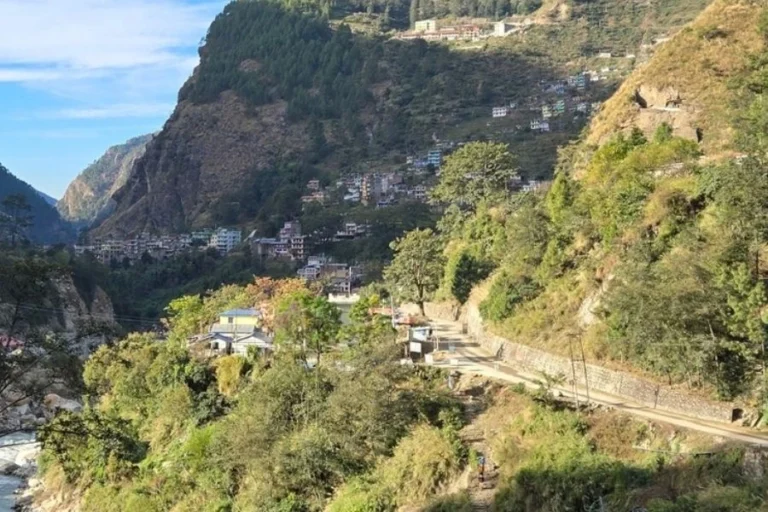
The village of Sherpagaon occupies a position of significant strategic and ecological importance in Langtang Valley. Located at an elevation of approximately 2,563 meters (8,408 feet), Sherpagaon functions not merely as a rest stop, but as a critical alternative node that connects the lower subtropical reaches of the valley with the alpine heights of Kyanjin Gompa. This report provides an exhaustive investigation into the geographical, historical, socio-economic, and cultural dimensions of Sherpagaon, framing it as a bastion of resilience and a model for sustainable Himalayan tourism.
Table of Contents
7 Facts About Sherpagaon
Sherpagaon distinguishes itself through a unique combination of topography, heritage, and logistical utility. The following ten facts illustrate its distinct role within the Langtang National Park ecosystem.
- Precision in Altitude and Atmospheric Positioning: Sherpagaon sits at a precise altitude of 2,563 meters (8,408 feet), positioning it within the temperate montane zone. This elevation is scientifically significant for trekkers; it facilitates early-stage acclimatization by stimulating the production of erythropoietin without subjecting the body to the more severe oxygen depletion found at elevations exceeding 3,500 meters, such as at Kyanjin Gompa (3,870m).
- The Strategic Alternative Route: Sherpagaon anchors the “upper route” of the Langtang trek, which offers a safer and more scenic bypass to the traditional river-level trail. While the lower route through Lama Hotel (2,470m) is frequently shadowed by narrow gorge walls and remains vulnerable to landslides, the Sherpagaon path maintains a higher line along the northern ridge, providing superior ventilation, drier trails, and a more open environment.
- A Cultural Crucible of Tibetan and Tamang Heritage: The village represents a unique demographic synthesis where the traditions of Tibetan migrants have merged with local Tamang and Sherpa customs. This cultural blend is visible in the local architecture, where traditional stone-masonry techniques are employed to build compact, heat-retaining dwellings that mirror the structural logic found on the Tibetan Plateau.
- Biodiversity and Wildlife Sightings: Because Sherpagaon is situated above the humid gorge and within the rhododendron and pine forests of the Langtang National Park, it serves as a prime location for observing rare Himalayan fauna. Trekkers frequently report sightings of the Himalayan Tahr, the Danphe—Nepal’s national bird—and the elusive Red Panda (Ailurus fulgens), which utilizes the local bamboo understory for foraging.
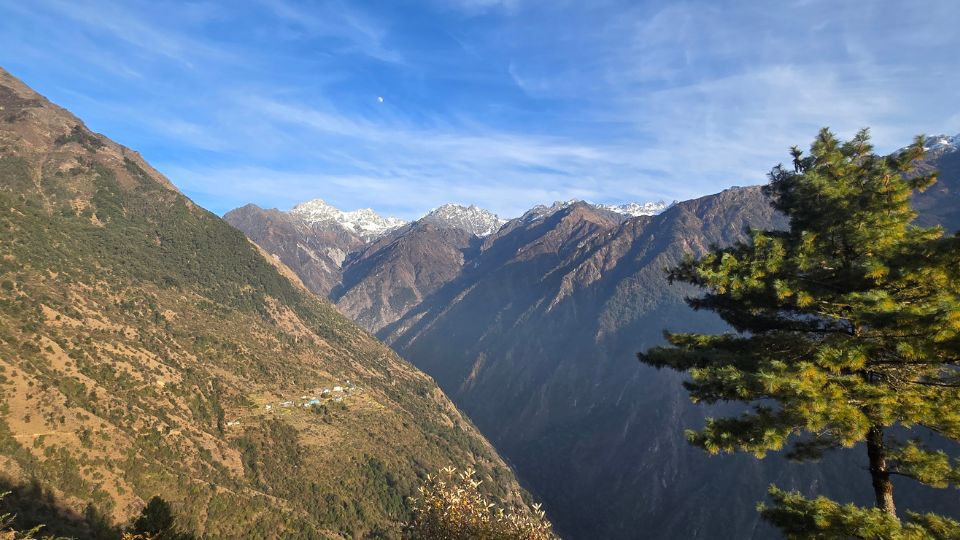
- Eye-Level Himalayan Perspectives: The geographical placement of Sherpagaon on a steep south-facing hillside allows for “eye-level” views of the Langtang range. Unlike the lower route, where the verticality of the peaks is obscured by the proximity of canyon walls, Sherpagaon offers unobstructed panoramas of Langtang Lirung (7,227m) and the Ganesh Himal peaks, providing a sense of scale and majesty that defines the high-altitude experience.
- Agricultural Innovation on Sloped Terraces: The residents of Sherpagaon employ sophisticated terraced farming methods to maximize arable land on slopes that often exceed 45 degrees. By utilizing stones to build retaining walls, they create flat planting surfaces that prevent soil erosion during the monsoon, allowing for the cultivation of high-altitude staples like potatoes, barley, and radishes.
- A Historical Waypoint for the Salt Trade: Centuries before the arrival of modern tourism, Sherpagaon was a vital waypoint on the trans-Himalayan salt trade route. Caravans of yaks and sheep passed through this ridge-line trail, carrying salt from the lakes of Tibet to be bartered for grain from the lower Nepalese valleys, a commerce that established the foundations of the village’s entrepreneurial culture.
History and Myths of Sherpagaon
The history of Sherpagaon is characterized by a deep connection to the Tibetan Plateau and a mythology that imbues the landscape with sacred significance. Understanding these roots is essential for contextualizing the village’s social structures and religious practices.
Origins and Tibetan Roots
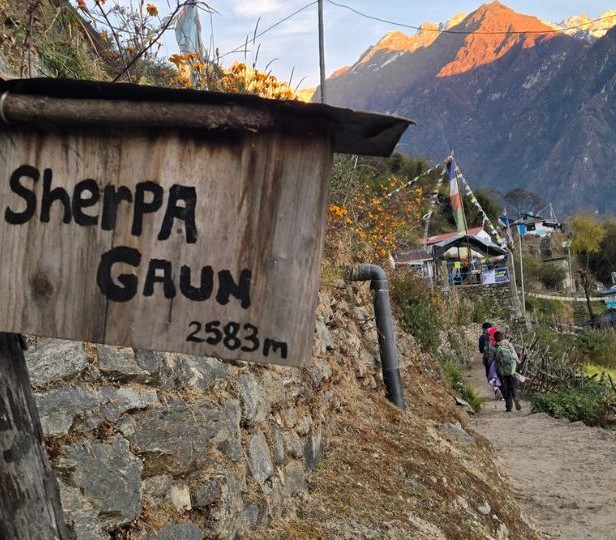
Sherpagaon was settled by migrants from Tibet who crossed the Himalayan passes in search of fertile land and refuge from regional conflicts. These early settlers, known as “Langtangpas” in the broader sense, brought with them a sophisticated understanding of high-altitude agropastoralism. The lineage of many local families can be traced back several centuries to the Kyirong and Tingri regions of Tibet.
The village’s development was historically tied to the Tibet-Nepal salt trade route. Traders would migrate north to the Tibetan plateau in the summer to collect salt and wool, returning south in the autumn to trade these items for rice, sugar, and iron. This trade was not merely economic but also served as a corridor for cultural and religious exchange, bringing Buddhist lamas and scholars into the Langtang region. The decline of this trade in the mid-20th century, following the introduction of iodized Indian sea salt and geopolitical changes, forced the residents of Sherpagaon to diversify their livelihoods, eventually leading to the birth of the local trekking industry.
Local Legends and Buddhism
The mythology of Sherpagaon is rooted in the concept of the “Beyul”—a sacred, hidden valley blessed by Guru Rinpoche (Padmasambhava) in the 8th century. The most pervasive legend concerns the discovery of the Langtang Valley by a Buddhist monk who was tracking a lost yak. The ox wandered deep into the mountains, leading the herder to a lush, fertile valley that had previously been concealed from human sight. This discovery is memorialized in the name “Langtang,” where “Lang” translates to yak and “Tang” means to follow.
Spirituality in Sherpagaon is physically manifested through the presence of chortens, mani walls, and the village gompa. Chortens, or stupas, are built to commemorate enlightened beings or to house sacred relics; they are believed to harmonize the local environment and protect the community from malevolent forces. Mani walls, constructed from hundreds of stones inscribed with prayers, line the entrance to the village, requiring all who pass to do so in a clockwise direction as a sign of respect and to accumulate spiritual merit.
Surviving the 2015 Earthquake
The earthquake of April 25, 2015, which measured 7.8 on the Richter scale, was a transformative event for the entire Langtang region. While the village of Langtang was tragically buried by a massive avalanche of ice and rock that killed approximately 300 people, Sherpagaon’s geographical position on a stable ridge high above the riverbed prevented it from facing a similar fate. However, the village did suffer significant structural damage, with many traditional stone houses collapsing under the force of the tremors.
The resilience of Sherpagaon was demonstrated in its rapid rebuilding phase. Residents organized themselves through the Langtang Management and Reconstruction Committee to raise funds and manage the distribution of aid provided by international organizations like the Himalayan Climate Initiative and Sunaulo Sansar. This rebuilding effort was not just about physical structures but also about social cohesion; the community worked together to repair the “upper route” trails, which became the primary logistical lifeline for the valley while the lower river trail was blocked by debris. Today, Sherpagaon serves as a testament to the strength of the Himalayan people, with its new buildings integrating modern seismic safety standards while maintaining traditional aesthetics.
Sherpagaon Today
Sherpagaon is slowly gaining popularity as an alternative route and one of the overnight villages within Langtang Region for those completing the Langtang National Park Trek. Modern Sherpagaon is a village in transition, successfully integrating 21st-century technologies with ancient mountain traditions. This modernization is driven by the requirements of the tourism industry and the aspirations of the younger generation.

Modern Amenities for Trekkers
Trekkers arriving in Sherpagaon today will find facilities that contradict the village’s remote appearance. The availability of communications and power has reached a level of reliability that supports both safe travel and professional digital work.
- Communication Networks: Mobile network signals from Ncell and NTC are generally available, allowing for voice calls and basic data services. Many teahouses have also invested in satellite-based Wi-Fi systems, providing high-speed internet access to guests for a small fee.
- Electricity and Charging: Solar energy is the primary source of power in Sherpagaon. Most teahouses provide charging ports in common areas, and some newer lodges have integrated sockets directly into the guest rooms. This power supports lighting and the operation of small appliances, although high-wattage items like hair dryers are generally prohibited due to the limited capacity of solar batteries.
- Water and Hygiene: Sanitation has improved significantly, with many establishments offering hot showers powered by gas geisers or solar heaters. The village also prioritizes water safety, with most lodges offering UV-filtered or boiled water to reduce the environmental impact of plastic bottles.
Community and Sustainability
Sustainability is a core value in modern Sherpagaon, driven by the village’s location within a protected national park and the community’s desire to preserve their environment for future generations.
- Waste Management: The village participates in a centralized waste management system where non-biodegradable trash is segregated, collected, and transported to lower regions for processing. This effort is supported by youth groups who use social media and digital tools to organize cleaning drives and raise awareness among visiting tourists.
- The Digital Generation: The younger residents of Sherpagaon are increasingly tech-savvy, using the internet to market their teahouses and share the beauty of their culture with a global audience. Many young people who were educated in Kathmandu have returned to the village to apply their knowledge to eco-tourism, ensuring that Sherpagaon remains vibrant and economically viable in the digital age.
- Community Projects: Local initiatives focus on preserving traditional crafts, such as weaving and stone carving, while also developing new skills in hospitality and sustainable agriculture. These projects are often supported by NGOs and the Langtang National Park authority, aiming to create a balanced economy that does not rely solely on seasonal tourism.
Sherpagaon Weather
The climate of Sherpagaon is a critical factor for agricultural cycles and trekking safety. Weather patterns have shifted in recent years, requiring more careful planning for those visiting the region.
Spring (March to May) and Autumn (September to November)
These months represent the peak trekking windows, offering the most stable conditions and the most impressive mountain views.
- Spring: This season is characterized by a “reawakening” of the landscape. As the snow melts, the rhododendron forests burst into bloom, creating vibrant splashes of color against the green slopes. Daytime temperatures are pleasant, though the air can be quite humid as the monsoon approaches.
- Autumn: Considered the “prime” season, Autumn offers the clearest skies and most reliable weather. Following the monsoon, the atmosphere is scrubbed clean of dust, providing unparalleled visibility for photography and summit views. Recent climate shifts have extended this window into late November and early December.
Winter and Monsoon Seasons
The off-peak seasons in Sherpagaon bring extreme conditions that require specialized equipment and careful risk assessment.
- Winter (December to February): Temperatures in Sherpagaon can plummet to 10°C or lower at night. While days are often sunny and clear, the risk of heavy snowfall can block high-altitude passes and make trails treacherous. Many teahouses close during this period as the local population migrates to lower elevations.
- Monsoon (June to August): This period is marked by daily heavy rainfall and high humidity. The trails become slippery and are often infested with leeches, and the risk of landslides increases significantly. However, the monsoon is the most important time for the village’s farmers, as the rains sustain the potato and barley crops.
Average Temperature by Season in Sherpagaon (2,563m)
| Season | Months | Avg High (°C/°F) | Avg Low (°C/°F) | Sky Condition |
| Spring | Mar – May | 18°C or 64°F | 5°C / 41°F | Clear mornings, cloudy afternoons |
| Monsoon | Jun – Aug | 22°C / 72°F | 12°C / 54°F | Heavy rain, obscured views |
| Autumn | Sep – Nov | 15°C / 59°F | 0°C / 32°F | Crystal clear, stable visibility |
| Winter | Dec – Feb | 8°C/ 46°F | 10°C/ 14°F | Sunny but freezing, snow likely |
Note: Data represents regional climatic trends adjusted for Sherpagaon’s 2,563m elevation.
Sherpagaon Map and Geography
The geography of Sherpagaon is a study in verticality. Perched on a steep, south-facing hillside, the village occupies a strategic vantage point that has dictated its history and its modern role as a trekking hub.
Location and Landscape
Sherpagaon is situated in the Rasuwa District of Nepal, within the central Himalayas. It sits on the northern wall of the Langtang Khola valley, directly opposite the peaks of the Ganesh Himal range. The landscape is dominated by steep, terraced slopes that transition from subtropical oak and bamboo forests below the village to temperate pine and rhododendron forests above.
The village’s south-facing orientation is a key geographical feature. This aspect ensures maximum exposure to sunlight throughout the year, which is essential for heating the stone buildings and providing the solar energy that many teahouses rely on. The terrain is rugged, with the village itself built on a series of stable rock benches that offer protection from the landslides that frequently plague the lower river valley.
Sherpagaon Map
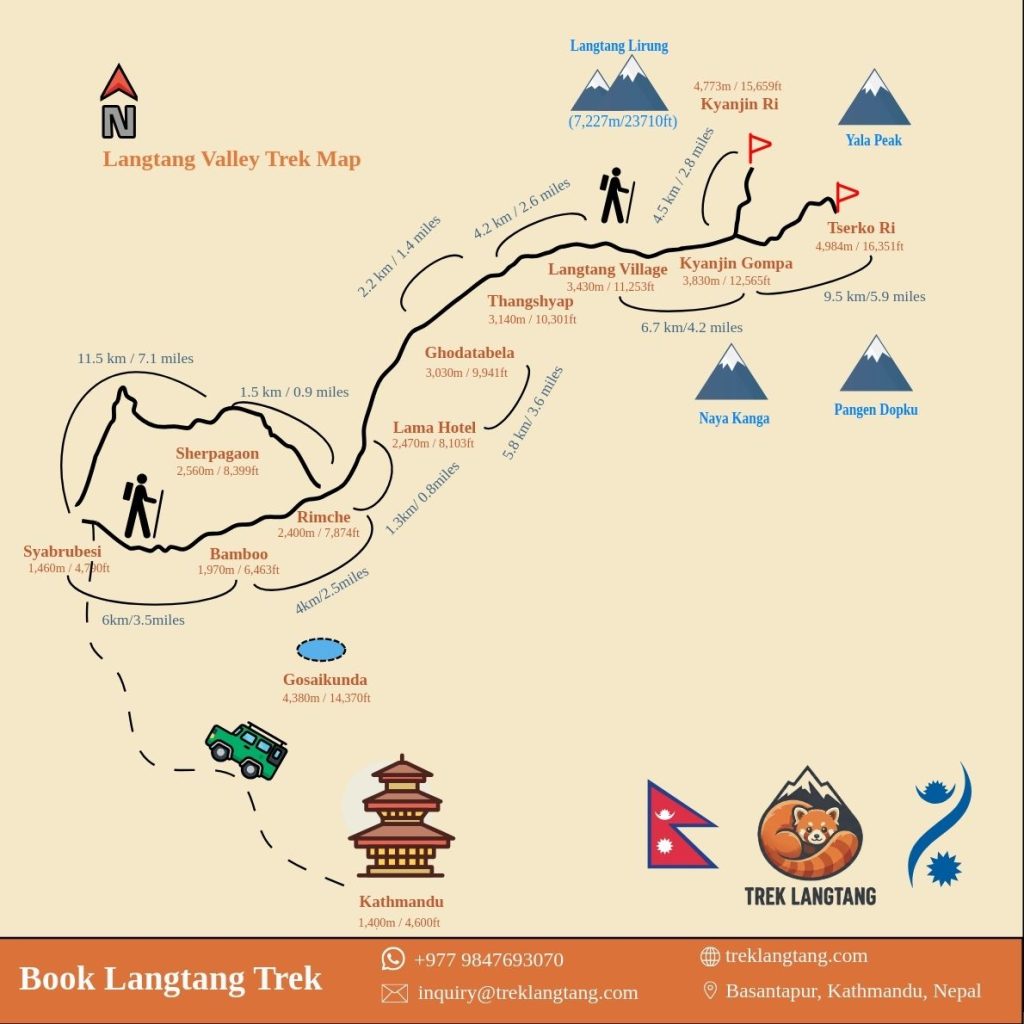
We have prepared a Sherpagaon map that highlights nearby villages in the area. Additionally, we’ve created a comprehensive map of the Langtang Valley for trekkers interested in the wider region.
Trekking Routes to Sherpagaon
The trek to Sherpagaon is an essential part of the Langtang experience, offering a different perspective on the valley’s diverse ecosystems.
- Starting Point: Syabrubesi (1,460m): The journey begins in this riverside hub, reachable by a 7-8 hour drive from Kathmandu.
- The Ascent to Khangjim (4.3 km): Trekkers cross the Bhote Koshi river and begin a steep climb of approximately 800 vertical meters. The trail zig-zags up the hillside, offering views back down toward Syabrubesi and the surrounding hills.
- Bhanjyang (Surka) Waypoint (1.8 km): After reaching the village of Khangjim (2,255m), the trail continues a moderate climb to the ridge at Bhanjyang/Surka (2,400m), a popular spot for lunch and photographs.
- The Ridge Walk to Sherpagaon (5.3 km): This is the most scenic section of the day. The trail follows the contours of the mountain, undulating through “enchanted” forests of moss-covered trees and rhododendrons before arriving at the village of Sherpagaon (2,563m).
| Route Segment | Distance (km) | Time (hrs) |
| Syabrubesi to Khangjim | 4.3 | 3.0 |
| Khangjim to Bhanjyang | 1.8 | 1.0 |
| Bhanjyang to Sherpagaon | 5.3 | 2.5 |
| Total Day 1 | 11.5 | 6.5 |
Note: Distances and times are averages for a moderate trekking pace.
Teahouses in Sherpagaon
The teahouses of Sherpagaon are more than just lodgings; they are the centers of economic activity and social exchange for both locals and travelers.
Accommodation Standards
Teahouse accommodation in Sherpagaon is generally superior to that found in the lower, more humid sections of the trek. The stone and timber buildings are designed to withstand the cold and provide a communal environment for travelers.
- Guest Rooms: Most rooms are simple, featuring twin wooden beds with mattresses, clean sheets, and thick blankets. While basic, these rooms offer privacy and protection from the elements.
- The Dining Hall: Every teahouse has a large central dining hall. This is where guests eat, socialize, and warm up by the central stove, which is typically fueled by wood or dried animal dung.
- Facilities: Standard lodges provide shared bathrooms with squat or sit-down toilets, while premium options offer attached bathrooms and solar-heated showers.
Food and Dining
Dining in Sherpagaon is a highlight for many trekkers, offering a taste of authentic Himalayan cuisine supplemented by familiar international dishes.
- Local Staples: Dal Bhat (rice and lentils) is the foundation of the diet. Other local favorites include Tibetan bread, Tsampa (barley porridge), and Momos (dumplings).
- Energy for the Trail: To help with acclimatization and energy levels, menus include garlic soup, potato dishes, and pasta.
- Regional Specialties: Yak cheese, produced at the cheese factory in Kyanjin Gompa and transported down to Sherpagaon, is a must-try item. Many lodges also serve butter tea, a salty Tibetan beverage that provides essential fats and warmth in the high-altitude air.
For trekkers interested in a detailed menu throughout the Langtang Trek, including Sherpagaon, we have prepared a ‘Food on the Langtang Trek‘ page that lists all available meal options.
Recommended Teahouses
The following teahouses in Sherpagaon have been consistently praised for their cleanliness, food quality, and warm hospitality:
- Super View Guesthouse: Renowned for its southward orientation and large windows, this lodge provides some of the best mountain views in the village.
- Namaste Guest House: Often cited as the premier choice for individual trekkers, it offers spacious rooms with attached bathrooms and reliable Wi-Fi.
- Hotel Sherpagaon: A long-standing establishment known for its professional service and hearty portions of traditional Nepali food.
Local Economy and Livelihood in Sherpagaon
The economic structure of Sherpagaon is a dual system of traditional agropastoralism and modern tourism services. This balance is critical for the village’s long-term stability.
Traditional Agriculture and Herding
Despite the growth of trekking, many families in Sherpagaon continue to rely on the land for their primary subsistence.
- High-Altitude Farming: The village specializes in crops that can withstand the thin air and cool temperatures of 2,500m. Potatoes are the primary staple, with several hardy varieties grown for both food and seed. Barley and radishes are also common, providing a varied diet for the residents.
- Yak Herding: Yaks, Naks (female yaks), and Chauris (hybrids) are the most important assets for local families. These animals provide milk for cheese and butter, wool for traditional clothing, and serve as essential pack animals for transporting goods up and down the steep mountain trails. The movement of these herds is seasonal, with animals being driven to higher pastures in the summer and brought back to the village for the winter.
The Impact of Trekking Tourism
Tourism has provided a significant financial boost to Sherpagaon, allowing families to invest in better housing, education, and healthcare.
- Diversified Income: Most families now supplement their agricultural earnings with income from running teahouses, working as trekking guides, or providing porter services. The “upper route” popularity ensures that Sherpagaon receives a consistent flow of tourists throughout the peak seasons.
- Economic Resilience: The tourism industry has created a market for local agricultural products, enabling farmers to sell their cheese, milk, and vegetables directly to lodge owners.
- Youth Retention: By providing high-paying jobs within the village, the trekking industry has encouraged many young people to remain in the Langtang Valley rather than migrating to the cities for work. This ensures that the village remains a living, breathing community rather than just a seasonal tourist stop.
Conclusion
Sherpagaon represents the heart of the Langtang experience, serving as a vital bridge between the history of the Himalayas and the future of sustainable tourism. Through its strategic elevation, cultural synthesis, and resilient community spirit, the village has transformed from a remote trade waypoint into a sophisticated and welcoming hub for global adventurers. By preserving its ancient myths and traditions while embracing modern amenities and sustainable practices, Sherpagaon ensures that the “Valley of Glaciers” remains a sanctuary of peace and wonder for all who track the lost yak into the deep mountains.