Comparing Langtang Trek and Everest Base Camp Trek
Trekkers evaluating Nepal’s Himalayan routes frequently weigh the Langtang Valley Trek against the Everest Base Camp (EBC) Trek. Both regions offer distinct topographies, cultural encounters, and logistical demands, requiring hikers to match their physical capabilities and travel goals with the right trail.
The Everest Base Camp route demands rigid 14-day schedules, introduces 5,100-meter sleeping altitudes, and rewards milestone seekers with direct views of the world’s highest 8,000-meter peaks. Conversely, the Langtang route delivers rapid access to 4,000-meter peaks, lowers acute mountain sickness (AMS) risks, and provides uncrowded, rhythmic trails for beginner trekkers and reflective hikers.
Decision-makers must compare specific logistical variables such as flight cancellation risks, daily altitude gains, infrastructure costs, and crowd density before committing to either expedition. The table below outlines the core structural and experiential differences between the two treks to help you finalize your itinerary.
Table: Langtang Valley Trek vs Everest Base Camp Trek
| Feature | Langtang Valley Trek | Everest Base Camp (EBC) Trek |
|---|---|---|
| Transport Type | Trekkers reach the trek starting point via a road journey (jeep or bus) to Syabrubesi. | Trekkers normally require a flight to Lukla to begin the trek and to return to Kathmandu. |
| Flight Risk | Langtang eliminates flight cancellation risks entirely. | EBC frequently experiences weather-related delays at Lukla Airport. |
| Proximity to Capital | Langtang serves as the closest high-altitude mountain trek to Kathmandu. Syabrubesi, the trek’s starting point, is 122 km away from Kathmandu. | Lukla, the starting point for the Everest Base Camp (EBC) trek, is 367 km from Kathmandu. Only a few trekkers opt to drive from Kathmandu to the EBC starting point. |
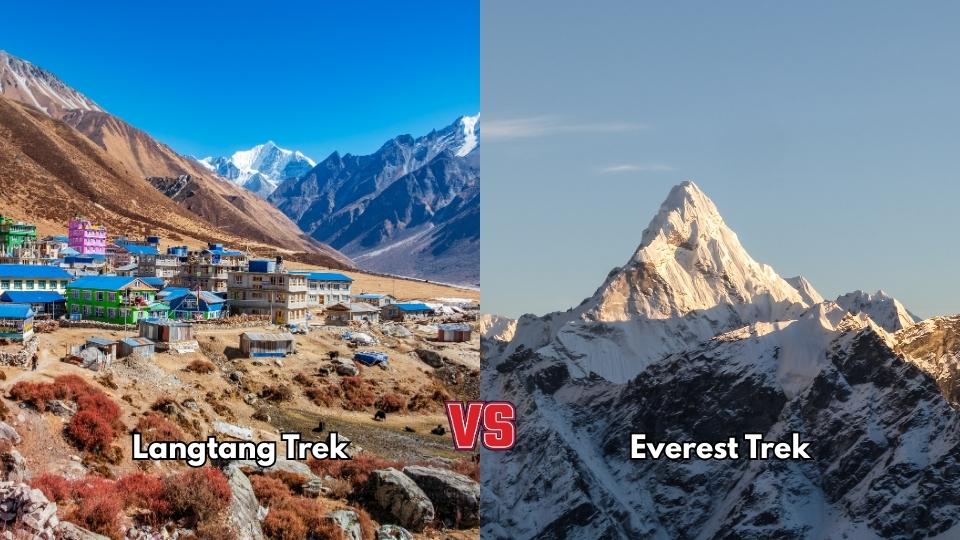
| Valley Profile | The route traverses a narrow, lush, and contained valley. | The route follows a wide, barren, high-alpine rocky corridor. |
| Peak Visibility | Trekkers view peaks like Langtang Lirung, Naya Kanga, Yala Peak, Gancenpho, Dorje Lakpa directly from the valley floor. | Trekkers stand at the base of 8,000-meter giants, including Mount Everest and Lhotse. Other notable peaks include Ama Dablam, Nuptse, Pumori. |
| Biodiversity | The region’s forests offer high chances of spotting Red Pandas and Langur monkeys. | The region’s alpine zones feature Yaks and Himalayan Thar. |
| Ethnic Groups | The Langtang region is home to the Tamang people. | The EBC region is home to the Sherpa people. |
| Spiritual Landmarks | The trek features the reconstructed Kyanjin Gompa. | The trek features the globally recognized Tengboche Monastery. |
| Crowd & Vibe | Langtang provides a less commercialized, raw village experience. | EBC operates as a bustling, high-traffic mountaineering hub. |
| Altitude Ceiling | The trail reaches a maximum altitude of 4,985 meters at Tserko Ri. | The trail reaches a maximum altitude of 5,555 meters at Kala Patthar. |
| Risk of AMS | Langtang presents a significantly lower risk of Acute Mountain Sickness (AMS) due to a 3,800-meter average sleeping altitude. | EBC increases AMS risk with average sleeping altitudes reaching 5,100 meters. |
| Trail Terrain | The path features forgiving, rhythmic trails. | The path features steep terrain, rocky steps, and rolling “Himalayan flats.” |
| Duration | The trek requires an 8-day time commitment. | The trek requires a 14-day long-haul commitment. |
| Total Cost | Langtang costs 40% to 50% less because it eliminates domestic flight costs and requires lower permit fees. Average cost is around USD 350 to USD 500. | EBC demands higher total costs due to flights and premium infrastructure. The average cost is around USD 1350 to USD 1500. |
| Infrastructure | Local operators offer basic, cozy teahouse accommodations. | Operators provide luxury lodges and high-end cafes in hubs like Namche Bazaar. |
| Crowd Density | Langtang maintains tranquil trails with low foot traffic. | EBC functions as a social, high-density trekking route. |
| Electricity & Connectivity | Lodges provide affordable and accessible electricity and connectivity. | Lodges charge high premiums for device charging and WiFi access. |
| Trekker Archetype | Langtang attracts reflective trekkers seeking quiet environments and beginner trekkers. | EBC attracts milestone seekers chasing iconic achievements. |
| Flexibility | Langtang accommodates last-minute itinerary changes easily. | EBC demands rigid scheduling due to pre-booked Lukla flights. |
Choosing between Langtang Valley and Everest Base Camp dictates your physical preparation, budget, and daily trekking experience. The 14-day Everest Base Camp route challenges trekkers with 5,100-meter sleeping altitudes and high-traffic trails to deliver iconic 8,000-meter peak views. Conversely, the 8-day Langtang trek eliminates Lukla flight risks, reduces total costs by 40% to 50%, and provides quiet paths through traditional Tamang villages.
Evaluate your altitude tolerance, available travel days, and budget to select the right trail so you can complete your Himalayan expedition safely and confidently.